
Introduction
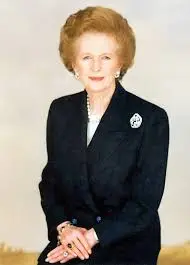
Margaret Thatcher, the first female Prime Minister of the United Kingdom, holds a significant place in contemporary political history. Her leadership from 1979 to 1990 not only transformed British society but also left an indelible mark on global politics. Known as the ‘Iron Lady’, Thatcher’s policies and tenacity continue to be studied and debated today, making her an important figure in understanding the dynamics of modern governance.
Thatcher’s Rise to Power
Born in 1925 in Grantham, Lincolnshire, Margaret Thatcher was educated at Somerville College, Oxford, where she studied chemistry. She joined the Conservative Party in 1945 and quickly ascended through the ranks, becoming the Member of Parliament for Finchley in 1959. After years of political manoeuvring, she became the leader of the Conservative Party in February 1975, subsequently winning the general election in 1979.
Key Policies and Reforms
Thatcher’s governance was characterised by a radical shift towards free-market policies. Her economic reforms included privatising state-owned industries, reducing the power of trade unions, and implementing substantial tax cuts. These policies aimed to combat the stagflation of the 1970s—a combination of stagnant economic growth and rising inflation. While supporters argue that her policies revitalised the British economy, critics claim they exacerbated inequality and social division.
Impact on Domestic and Foreign Policy
On the domestic front, Thatcher’s government was marked by her contentious approach to the mining industry, which led to widespread strikes and societal unrest. Internationally, her close relationship with US President Ronald Reagan played a crucial role in Cold War politics, exemplified by their joint opposition to the Soviet Union. Her staunch support for NATO and military intervention in the Falklands War in 1982 further cemented her image as a decisive leader.
Legacy and Conclusion
Thatcher’s resignation in 1990 marked the end of an era, but her influence persists. She remains a polarising figure; celebrated by conservatives for her economic vision and resilience, and critiqued by progressives for her social policies. As contemporary leaders grapple with similar economic and social challenges, understanding Thatcher’s methods and impacts continues to be relevant. Her legacy serves as a powerful reminder of the complexities of political leadership and its long-reaching effects on society.
 Yaw Appiah
 Evelyn Mensah
 Kwame Ofori