
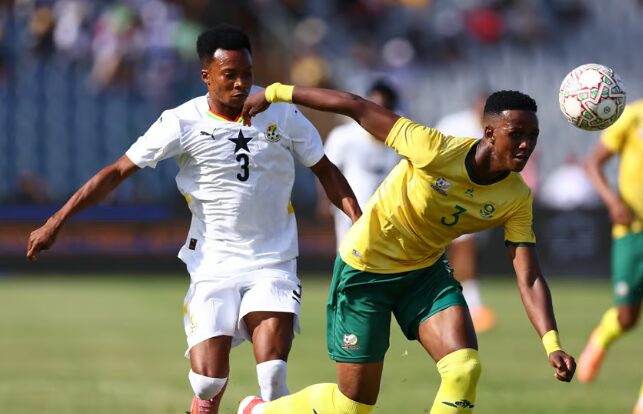
The football story of Ghana vs South Africa is built on rivalry, qualification pressure and two different football identities. Ghana often bring technical midfield play, tournament pedigree and strong individual talent. South Africa usually offer structure, transition pace and confidence in disrupting stronger-looking opponents. For both fan bases, the fixture carries emotional weight because it can reflect team direction, not only the final score.
Ghana vs South Africa rivalry and football identity
This fixture has a natural edge because both nations see themselves as important football forces in Africa. Ghana’s identity is connected with strong tournament history, technical players and a tradition of producing footballers for major leagues. South Africa’s identity is often linked with collective organisation, quick attacking moves and a passionate football public. The contrast gives Ghana vs South Africa a clear football story. Ghana may try to control central areas and build through combinations, while South Africa can look dangerous when space opens behind midfield. That tactical difference shapes the rhythm of the match before the teams even step onto the pitch.
Why the rivalry still matters
The rivalry matters because expectations are high on both sides. Ghanaian fans often expect the Black Stars to impose themselves, especially when the squad has stronger individual names. South African fans see the fixture as a chance for Bafana Bafana to prove progress against one of Africa’s respected teams. A draw can feel like a missed opportunity for one side and a useful result for the other. That emotional split is what gives the matchup its tension. It is not only about the scoreline, but also about what the result says about each team’s direction.
Key matches and turning points
The most memorable meetings between these teams have often carried qualification or tournament meaning. This is not a rivalry built only on friendly matches. Results between Ghana and South Africa have affected campaigns, group positions and public debate around both teams. One of the most discussed modern meetings came in World Cup qualifying, when Ghana defeated South Africa in a decisive match that carried controversy around a penalty decision. That game remains a reference point because it showed how fine margins can shape the rivalry. A single call, missed chance or defensive mistake can stay in football memory for years.
What past meetings reveal
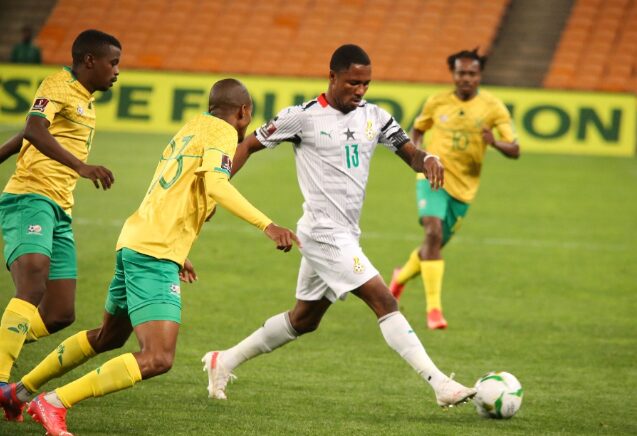
Past meetings show that Ghana and South Africa often test each other in midfield and transition. Ghana usually want control, possession and enough creativity to feed wide players or forwards. South Africa often look more dangerous when they defend compactly and break quickly.
- Midfield: Control in central areas can decide which side sets the tempo.
- Transitions: South Africa can threaten when Ghana lose the ball high.
- Width: Ghana’s wide players can stretch the defensive block.
- Set pieces: Dead-ball moments can matter when open play is tight.
- Finishing: Few chances may carry high value in a tense fixture.
This pattern does not decide the next game, but it gives the preview a useful base. If Ghana dominate possession without creating clear chances, South Africa can stay alive in the match. If South Africa lose compactness, Ghana can build pressure and turn possession into dangerous attacks.
Team form, squad news and tactical preview
Team form should be read through more than recent scores. A proper match preview looks at the level of opposition, home or away context, defensive consistency, chance creation and player availability. Confirmed lineups matter because one missing midfielder, centre-back or forward can change the balance of the game. For Ghana, the tactical question often begins with midfield control and sharper final-third decisions. For South Africa, the key issue is whether the team can stay compact without losing attacking threat. Injuries, suspensions and late tactical changes should be checked before the match view is final.
Ghana tactical themes
Ghana’s strongest version usually depends on tempo control, strong duels and technical quality in advanced areas. The Black Stars need to avoid slow possession that lets South Africa reset defensively. Quick switches, sharper passing between the lines and better use of wide spaces can make Ghana more dangerous. Defensively, Ghana must manage transitions. If the full-backs push high, the midfield needs to protect the space behind them. That balance can decide whether Ghana control the match or allow South Africa to grow through counters.
| Pros | Cons |
| Ghana have enough technical quality in midfield to control tempo, especially if their passing speed improves in central areas. | Slow buildup can allow South Africa to reset defensively and reduce the value of Ghana’s possession. |
| South Africa can create danger through compact defending, quick transitions and attacks into space behind advanced full-backs. | Sitting too deep for long spells may invite pressure and increase the risk of conceding from set pieces. |
| The rivalry has enough competitive balance to make tactical details, team news and finishing quality especially important. | Emotional pressure can lead to rushed decisions, defensive gaps or missed chances in key moments. |
South Africa tactical themes
South Africa’s route into the game can come through organisation and quick attacking movement. Bafana Bafana are often more effective when they defend compactly, recover the ball and attack before the opponent is fully set. That approach can frustrate Ghana if the Black Stars move the ball too slowly. The main risk is sitting too deep for too long. If South Africa invite constant pressure, Ghana may build around the box and create set-piece chances. If they press too high without structure, Ghana can find gaps through midfield.
Match preview: where the game could be decided
The central battle is likely to shape the match. Ghana can benefit if they slow South Africa’s transitions and move the ball into attacking areas with purpose. South Africa can benefit if they prevent Ghana from settling and force mistakes in buildup.
- Form: Recent results should be judged against opponent quality.
- Lineups: Confirmed starters matter more than predicted elevens.
- Injuries: Missing players can change team balance quickly.
- Venue: Conditions and crowd pressure can affect tempo
- Tactics: Pressing, width and midfield control shape the match.
Wide areas also matter. Ghana’s wide players can stretch the pitch, but South Africa may target the space behind them after turnovers. Set pieces could become important too, especially if open-play chances are limited.
Viewing logistics and time zone note
Viewing details should support the football article, not replace it. When a fixture is listed as south africa time, Ghanaian viewers should subtract two hours from the kickoff. The time difference between ghana and south africa is stable for this guide because Ghana uses GMT and South Africa uses SAST.
For a practical south africa time to ghana time conversion, 7:00 pm in South Africa is 5:00 pm in Ghana. Fans checking time in sa before kickoff should confirm the official match listing first, then convert the start time for local viewing in Ghana.
| South Africa listing | Ghana time |
| 3:00 pm | 1:00 pm |
| 5:00 pm | 3:00 pm |
| 7:00 pm | 5:00 pm |
| 9:00 pm | 7:00 pm |
Match context and odds movement
Betting context should stay secondary. Odds may shift when confirmed lineups, injuries or tactical news become public, but the article should not become a betting guide. The useful approach is to compare form, team news and tactical matchups before the game. Check the kickoff time, confirmed lineups and form before the match. The main story remains Ghana vs South Africa as a football rivalry, not a market movement or time-zone guide.
FAQ on Ghana vs South Africa rivalry and match context
What is the history of the Ghana vs South Africa football rivalry?
The rivalry is built on competitive African football meetings, qualification pressure and contrasting team identities. Ghana bring strong tournament history and technical quality. South Africa bring organisation, pace and national pride.
Why is Ghana vs South Africa an important fixture?
The match often affects group standings, qualification paths or tournament momentum. Even when it is not a final, it carries pressure because both teams expect to compete strongly. That makes team news, tactics and individual moments important.
What should fans watch tactically?
Fans should watch midfield control, transitions and wide areas. Ghana may try to control possession, while South Africa can threaten through quick breaks. Set pieces may also become decisive if open-play chances are limited.
How does the time difference affect Ghanaian viewers?
The time difference is mainly a viewing detail. Ghana is normally two hours behind South Africa, so a South African listing should be converted for local Ghana time. After that, attention should return to the match itself.
 Ama Serwah
 Yaw Appiah
 Kwame Ofori
 Evelyn Mensah