
Introduction
Donald Trump’s presence on Twitter has marked a pivotal shift in how social media is perceived within political spheres.
His usage of the platform not only reshaped campaign strategies but also demonstrated the power of direct communication with the electorate. As Twitter continues its evolution, the implications of Trump’s tweets remain a subject of great interest for both academics and political enthusiasts alike.
Trump’s Twitter Journey
Trump joined Twitter in March 2009 and quickly became one of its most followed figures. Throughout his presidency from 2017 to 2021, he used Twitter to communicate policy, critique opponents, and connect with his base. At his peak, he had more than 88 million followers. Trump’s tweets often sparked discussions and controversies, significantly impacting the news cycle and public opinion.
In January 2021, following the Capitol riots, Twitter permanently suspended Trump’s account, citing the risk of further incitement to violence. This decision not only stirred debates around free speech but also led to discussions regarding the responsibility of platforms in moderating content. The move provoked mixed reactions, with supporters arguing that it was necessary to prevent potential violence, while others decried it as censorship.
Current Developments
Since leaving office, Trump has largely remained in the public eye through his statements and appearances, with renewed interest in his relationship with social media platforms. His efforts to establish a new social media presence, with the launch of Truth Social, serves as a direct response to being banned from mainstream platforms like Twitter. However, the effectiveness and reach of Truth Social in comparison to Twitter remains a point of contention.
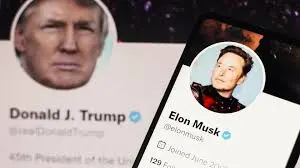
As of late 2023, there is ongoing speculation about the future of Trump on Twitter. Elon Musk’s acquisition of Twitter has reignited conversations about reinstating banned accounts. However, the final decision remains uncertain amidst the platform’s effort to navigate user safety and speech policies.
Conclusion
Trump’s influence on Twitter has undeniably changed the landscape of social media and its interplay with politics. As we navigate through 2023, it is crucial to observe how these developments unfold. Will Trump return to a platform that has proven crucial to his communication strategy? And how will social media policies evolve in addressing public figures and political discourse? Readers must remain aware of these changes, as they could signal wider shifts in political communication and the role of social media in shaping public perception and democracies worldwide.
 Yaw Appiah
 Evelyn Mensah
 Kwame Ofori