
Introduction
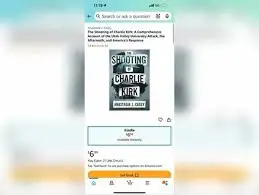
‘The Shooting of Charlie Kirk’ is a provocative new publication that delves deep into the contemporary political landscape and the complexities of freedom of speech. In a time when political discourse often escalates into violence, Kirk’s book addresses the urgent and increasingly relevant issue of the safety of public figures in the current climate. The book has ignited discussions across various platforms regarding the limits of discourse and the rising tensions in political arenas.
The Context Behind the Book
Published in late 2023, Kirk’s work explores a range of incidents involving threats against public figures, particularly those within the conservative movement. As a prominent conservative activist and founder of Turning Point USA, Kirk has been a vocal figure, inspiring both support and backlash. His experiences have underscored the challenges faced by individuals who engage actively in political dialogue.
The book provides a recounting of a specific incident where Kirk was threatened during a speaking engagement on a university campus, an experience that feeds into the overarching narrative of how political polarization can lead to violence. Through firsthand accounts, statistics, and expert analysis, Kirk invites readers to consider the implications of such acts not only for individuals but for society as a whole.
Thematic Elements
In ‘The Shooting of Charlie Kirk,’ themes of resilience and the fight for free expression take centre stage. Kirk articulates the idea that to stifle conservative voices is to undermine a fundamental principle of democracy. Furthermore, the book touches on the intersection of social media influence and real-world consequences, questioning how online rhetoric can escalate into physical altercations.
The fallout from the events depicted in the book extends beyond just Kirk; it speaks to a broader cultural moment where many feel their rights to free speech are under siege. Various chapters discuss not only the threats against Kirk but also wider implications for academic freedom and civic engagement in a divided nation.
Conclusion
‘The Shooting of Charlie Kirk’ is more than just a recounting of a single event; it is a call to action for readers to engage critically with the discourses surrounding freedom of speech and personal safety. As political tensions continue to simmer in the United Kingdom and beyond, the relevance of Kirk’s message cannot be understated. This book offers an essential perspective for anyone concerned about the current state of public discourse and the sanctity of free expression. With its release, one can only anticipate how it will influence discussions on political engagement and the protection of rights in a democratic society.
 Yaw Appiah
 Evelyn Mensah
 Kwame Ofori
 Ama Serwah