
Introduction
The peacock spider, belonging to the Maratus genus, has recently captured the fascination of arachnologists and nature enthusiasts alike. Renowned for their vivid colours and elaborate courtship dances, these tiny spiders exemplify the diversity and complexity of the natural world. As climate change and habitat loss threaten various species, understanding and conserving the unique behaviours and habitats of the peacock spider is increasingly important.
Characteristics of Peacock Spiders
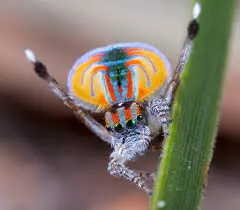
Peacock spiders are relatively small, with most species measuring just a few millimetres in length. Their most striking feature is their vibrant appearance; the males, in particular, display an array of colours that can include brilliant blues, greens, and reds. This stunning coloration serves a crucial role during mating rituals. Male peacock spiders perform intricate courtship dances to attract females, displaying their brightly coloured flaps, or ‘amps’, and performing bobbing and vibrating movements. These visual displays are not only eye-catching but also demonstrate the males’ fitness to potential mates.
Recent Discoveries and Research
Recent research has led to the discovery of several new species of peacock spiders. Scientists have documented over 50 species, with many more likely undiscovered. One notable finding is the Maratus jactatus, which showcases a distinct pattern of jumps and displays during its mating dance. These discoveries highlight the importance of documenting biodiversity, especially in areas like Australia, where peacock spiders are predominantly found. Researchers from various institutions are using advanced techniques, including high-speed cameras, to analyse the spiders’ movements and understand what attracts females during mating.
Conservation Efforts
Despite their fascinating behaviours and appearances, peacock spiders face threats due to habitat destruction and climate change. Conservationists stress the need to protect the ecosystems in which these spiders reside, primarily scrublands and open forests in Australia. Documenting species diversity and understanding the ecological roles of these spiders can help guide conservation strategies. Public interest, bolstered by social media and viral videos of their dances, has heightened awareness about the importance of maintaining healthy habitats for these creatures.
Conclusion
The peacock spider is more than just a beautiful creature; it is a symbol of the intricate web of biodiversity that needs protection. As we learn more about these tiny spiders and their roles in the ecosystem, we gain insights into the broader environmental issues at play. Continued research and conservation efforts are essential to ensure that future generations can appreciate the stunning displays of peacock spiders and the ecological balance they represent. Protecting these extraordinary creatures could ultimately contribute to the preservation of the rich tapestry of life on Earth.
 Yaw Appiah
 Evelyn Mensah
 Ama Serwah
 Kwame Ofori