
Introduction
The question of whether life exists on Mars has captivated scientists and enthusiasts for decades. The importance of this topic extends beyond mere curiosity; it challenges our understanding of life’s potential across the universe and the conditions required for it to thrive. With several recent missions providing compelling data, the exploration of Mars is more relevant than ever as humanity seeks to answer pivotal questions about our place in the cosmos.
Recent Discoveries
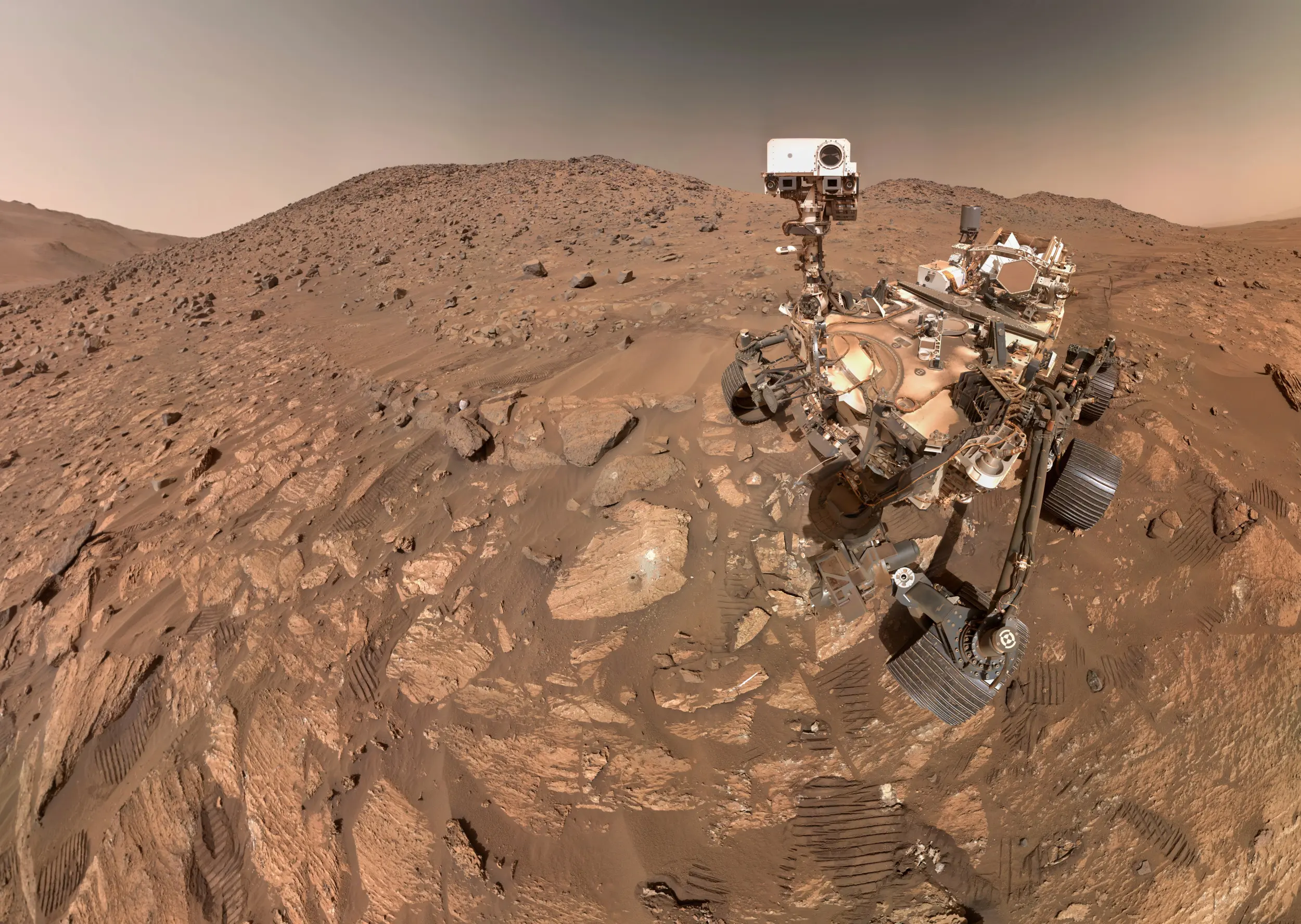
Recent evidence suggests that Mars, once a much wetter environment than it is today, could have hosted microscopic life forms. NASA’s Perseverance Rover, which landed on the Martian surface in February 2021, has been instrumental in this exploration. It has collected samples from the Jezero Crater, an area believed to have contained water billions of years ago. The rover’s findings include organic molecules and essential minerals that could hint at past life.
Moreover, the European Space Agency’s Trace Gas Orbiter has been conducting atmospheric investigations and discovered methane spikes, which, on Earth, are frequently associated with biological activity. While these findings could arise from geological processes, they open new avenues for inquiry. The presence of chloride minerals found on the Martian surface also suggests that liquid water might occasionally flow, creating a potential habitat for life.
Significance of Martian Exploration
The implications of finding life, or even signs of past life, on Mars extend beyond scientific knowledge; they could reshape our understanding of biology and evolution. If Mars was historically habitable, it raises questions about the possibilities of life elsewhere in our solar system, such as on Europa or Enceladus, and beyond. Furthermore, discoveries on Mars could inform how we prepare for future human exploration and potential colonisation, which is an aspect of growing interest, particularly with projects like SpaceX’s ambitions for crewed missions to the Red Planet.
Conclusion
The search for life on Mars is not only a quest for extraterrestrial biology but a broader exploration of our origin and connectivity to the universe. As technologies advance and missions continue, we can expect further revelations from the Martian surface. The significance of these findings will likely lead to heightened interest in astrobiology and interplanetary research. With ongoing missions and upcoming projects, including the Mars Sample Return mission planned for the late 2020s, we are on the brink of potentially groundbreaking discoveries that might one day prove we are not alone in the universe.
 Yaw Appiah
 Evelyn Mensah
 Ama Serwah
 Kwame Ofori