
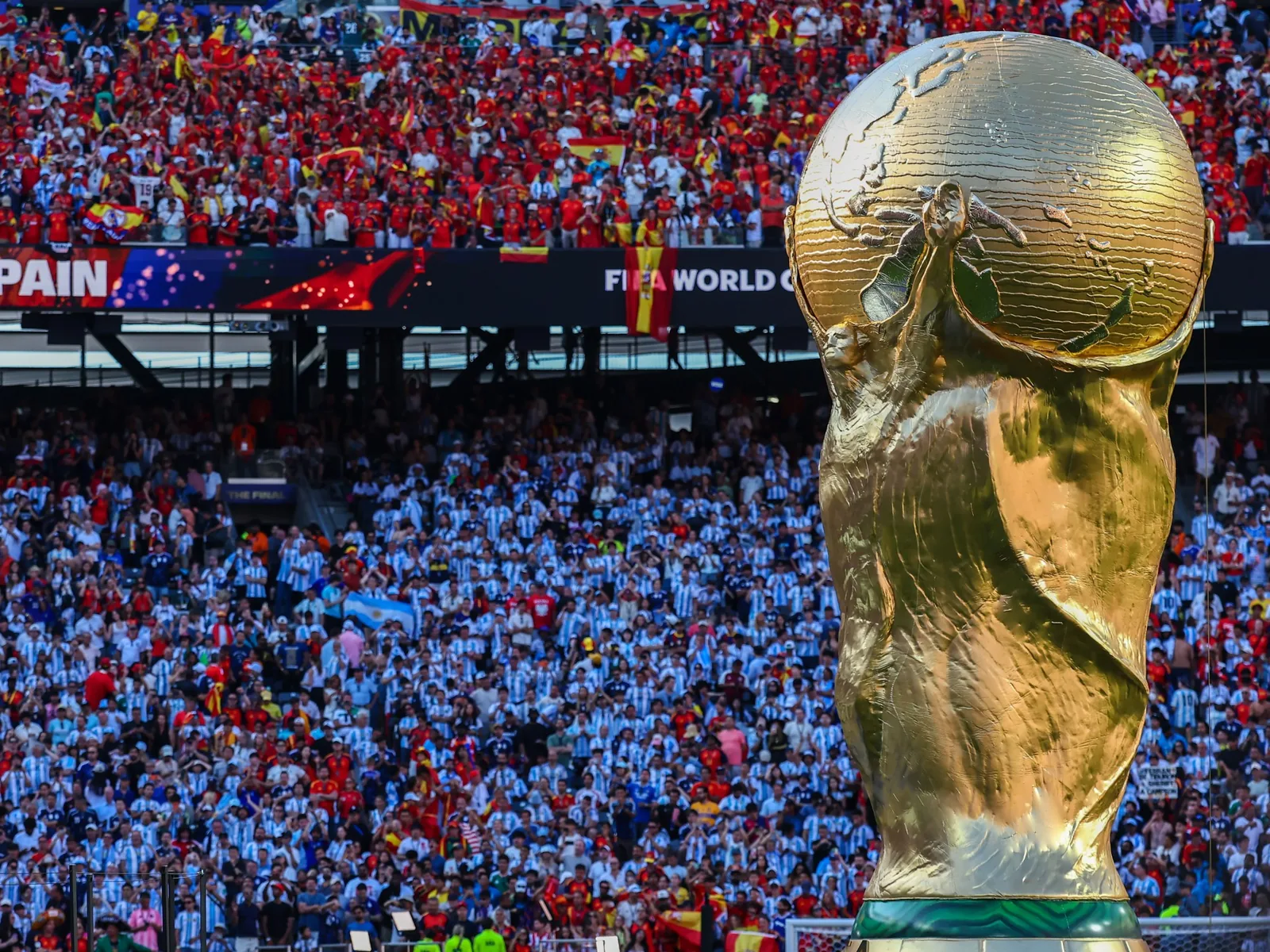
Spain has ascended to the top of the FIFA men’s rankings, displacing Argentina, following their recent World Cup triumph. This marks the first time Spain has held the top position since January. Spain defeated Argentina in the final.
The 2026 World Cup concluded with an unusual alignment at the top of men’s international football. For the first time in the tournament’s history, the four semifinalists—Spain, Argentina, France, and England—also occupy the top four spots in the FIFA rankings. These four nations collectively hold eight World Cup titles.
France remains in third place in the rankings, while England holds the fourth position. Brazil moved up to fifth, and Morocco achieved a record-high sixth place in the rankings. Portugal experienced a two-place drop to seventh after their exit in the Round of 16 of the World Cup.
Belgium advanced to eighth, exchanging places with the Netherlands, who are now ninth. Mexico climbed four positions to enter the top 10. Norway saw a significant rise, moving 12 places to 19th. Conversely, Germany dropped out of the top 10, falling to 12th, just ahead of Croatia. Italy, which did not qualify for the World Cup, is now 15th.
Among other notable movements, Egypt rose five spots to 24th, and Paraguay climbed seven places to 34th after reaching the World Cup Last 16. Ghana also moved up eight places in the rankings. Tunisia experienced the largest decline, falling 12 places to 57th.
Dominance of European Teams
Despite challenges faced by traditional footballing nations like Germany and Italy, Europe continues to be a dominant force in men’s international football. Nine of the top 15 teams in the FIFA rankings are from Europe, including three of the four semifinalists from the 2026 World Cup.
The Union of European Football Associations (UEFA) has historically been one of the primary power centres in the men’s game, alongside the South American Football Confederation (CONMEBOL). However, CONMEBOL currently has fewer teams at the top of the rankings, partly due to weaker performances from historically strong teams like Brazil and Uruguay.
Brazil, with a record five World Cup titles, is ranked fifth. Uruguay, a two-time champion, is positioned 20th. The latest rankings, updated on July 20, 2026, reflect the standings after the conclusion of the 2026 World Cup.
World Cup Bans and Suspensions
The history of the World Cup includes instances where countries have been prevented from participating due to official suspensions or bans. Since the tournament’s inception in 1930, at least 13 nations have faced such restrictions, which directly impacted their ability to compete in the World Cup or its qualification campaigns.
The reasons for these bans typically fall into three main categories: armed conflict and international sanctions, government interference in national football associations, or serious sporting violations. For example, Germany and Japan were excluded from the 1950 tournament following World War II sanctions. Yugoslavia was removed from the 1994 World Cup due to United Nations sanctions related to the Yugoslav Wars.
More recently, Russia was suspended by FIFA and UEFA following its 2022 invasion of Ukraine, making it ineligible for the 2022 World Cup playoffs and qualification for the 2026 tournament. This suspension extends to a second consecutive World Cup cycle, making Russia the only country currently barred from the 2026 FIFA World Cup.
Government interference in national football associations is another common reason for suspensions. FIFA mandates that member federations operate independently of political authorities. Countries such as Indonesia, Kuwait, Kenya, Zimbabwe, and Pakistan have faced suspensions for violating these statutes, often due to governments dissolving federations or intervening in elections.
Sporting violations have also led to bans. Mexico was expelled from the 1990 World Cup due to fielding overage players in a youth tournament. Chile was banned from the 1994 World Cup after an incident involving goalkeeper Roberto Rojas faking an injury during a qualifier. The 2026 World Cup rankings were officially updated on July 20, 2026.
Source: visualcapitalist.com
 Ama Serwah
 Yaw Appiah
 Evelyn Mensah
 Kwame Ofori