

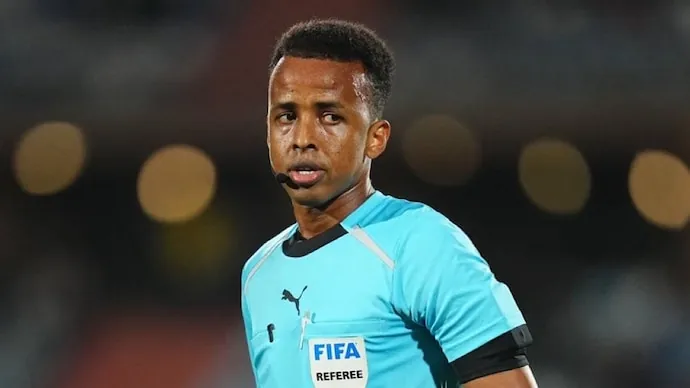
Omar Artan, a referee from Somalia selected to officiate at the World Cup 2026, has been denied entry into the United States. This decision means he will not be able to participate in the tournament, which is scheduled to run from 12 June to 19 July across Canada, Mexico, and the United States.
Artan, who was named the 2025 Confederation of African Football men’s referee of the year, was reportedly turned away at Miami International Airport and subsequently sent to Turkey. This incident has raised concerns regarding visa and travel policies impacting personnel involved in the global event.
Travel Restrictions Impact World Cup Personnel
No official reason has been provided by US immigration authorities for the denial of entry to Omar Artan. However, Somalia is among several countries subject to travel restrictions previously implemented by the administration of President Donald Trump. Reports indicate that Artan was traveling with a diplomatic passport, and the Somali Embassy in Nairobi had assisted in securing his visa following initial delays.
The situation highlights broader logistical and administrative challenges ahead of the World Cup 2026. US Customs and Border Protection has not publicly commented on the specific case. Somalia is currently under strict US travel bans, with limited exceptions for diplomatic tasks or American national interests, making it difficult for most Somali citizens to obtain US visas.
Artan became a FIFA referee in 2018 and has officiated in the African Cup of Nations (Afcon). He is considered a top official in African football, having handled significant CAF Champions League matches. His selection for the World Cup refereeing team was a notable achievement, making him part of an elite nine-member African referee group.
This incident is not isolated, as other personnel from nations with strict US vetting, including Iran, have also faced travel issues. The International Sports Press Association (AIPS) has reportedly voiced concerns to FIFA about numerous visa rejections for African and Iranian sports journalists. Even Iran’s official team photographer was reportedly barred from entering the country.
Logistical Challenges for Participating Teams
The strict US entry policies are also creating logistical difficulties for teams participating in the tournament, particularly due to the multi-country hosting arrangement. Some teams have complex travel schedules that require multiple entries into the United States, which is problematic for those granted only single-entry visas.
For instance, Ivory Coast is scheduled to play a group match in Toronto, Canada, between two games in Philadelphia, USA. Similarly, Senegal’s final group match is in Toronto, meaning they would need to re-apply for entry into the US if they advance to the knockout rounds. Tunisia faces a similar challenge, with their first two matches in Mexico before traveling to Kansas City, USA, for their last group game.

These issues underscore the pressure on FIFA to address the travel and visa complexities to ensure the smooth running and global spirit of the World Cup 2026. The tournament is expected to draw over 6.5 million fans from more than 100 countries to witness 104 games across the three host nations.
The denial of entry for Omar Artan, a referee announced by FIFA to officiate at the finals, highlights the ongoing challenges with travel restrictions for the upcoming tournament.
Read Also
Source: bbc.com
 Yaw Appiah
 Kwame Ofori
 Evelyn Mensah
 Ama Serwah