
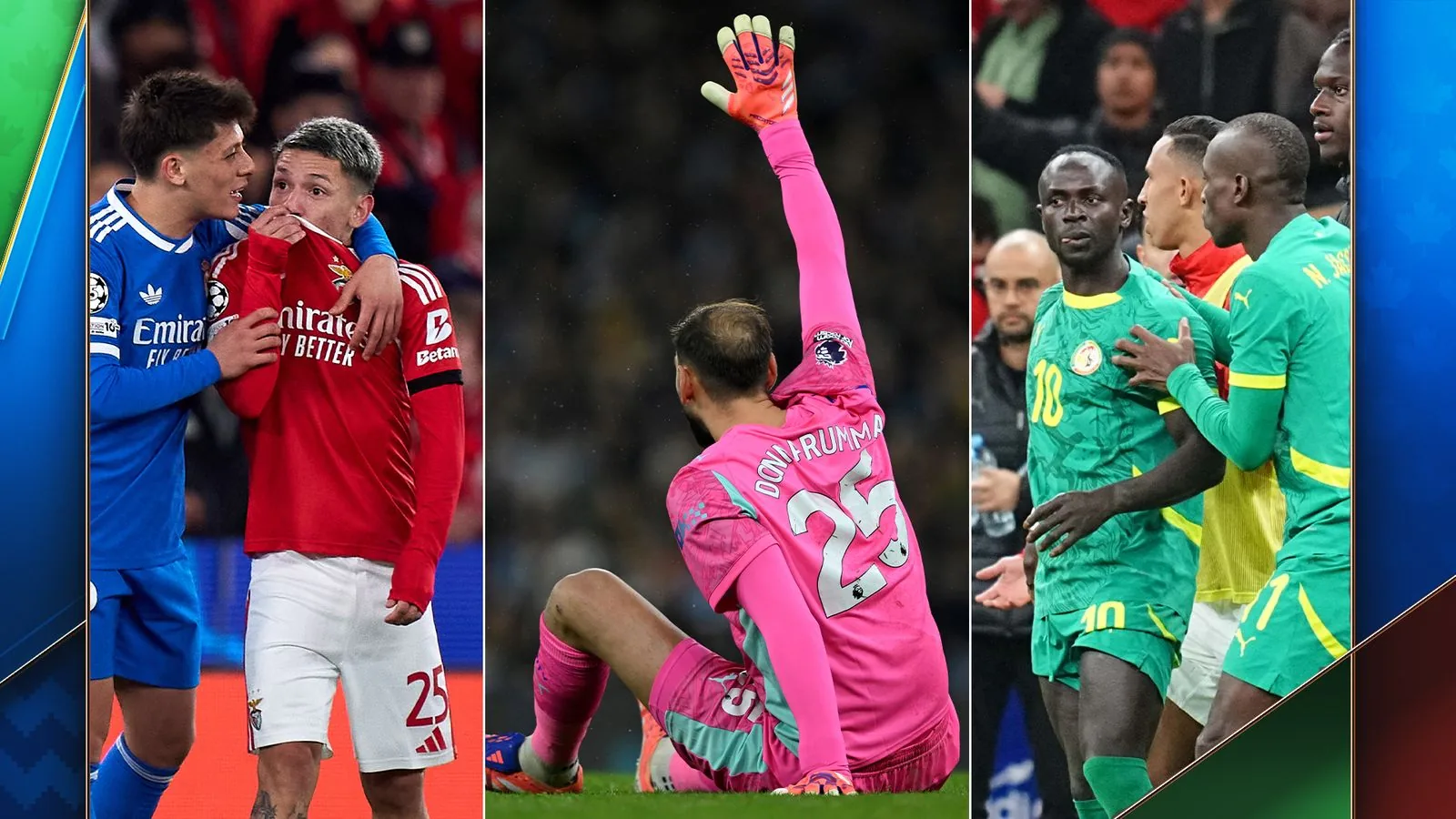
The 2026 World Cup will feature a number of new rules for teams, players, and managers. These changes, confirmed by the International Football Association Board (IFAB), include expanded powers for the Video Assistant Referee (VAR), stricter penalties for player conduct, and measures aimed at reducing time-wasting during matches.
The tournament is set to run from June 11 to July 19, with 48 teams competing across North America. Co-hosts Mexico will open the competition against South Africa, followed by Canada facing Bosnia and Herzegovina. The USA will play Paraguay, while reigning champions Argentina are scheduled to play their first match on Wednesday morning. England will begin their campaign against Croatia.
Expanded VAR Capabilities
The VAR system will see its influence broadened to cover additional on-field incidents. Previously, VAR reviews were limited to goal/no goal decisions, penalty/no penalty situations, and direct red cards. The new regulations allow for reviews in several other scenarios.
One significant change permits VAR to intervene if a corner kick is incorrectly awarded, provided the review does not cause a delay in the game’s restart. This aims to correct instances where the last touch came from an attacking player but a corner was still given.
VAR can also now address attacking fouls that occur before play officially restarts. For example, if a foul takes place before a corner or free kick is taken, VAR can recommend disciplinary action. This was highlighted by an incident involving Tottenham Hotspur, where a player was reportedly fouled before a corner was taken during a match against Chelsea.
Furthermore, VAR will be able to step in for red cards issued due to an incorrect second yellow card. It can also correct cases of mistaken identity, where a yellow or red card is given to the wrong player for a foul committed by another.
New Conduct Rules and Time-Wasting Measures
New rules have been introduced to address player conduct and reduce time-wasting. Players who cover their mouths to speak during confrontational situations will now face a red card. However, covering mouths during friendly conversations will not be penalised. This rule stems from a recent incident involving Benfica’s Gianluca Prestianni and Real Madrid’s Vinicius Junior.
Players who leave the pitch in protest of a referee’s decision will also be shown a red card. If a team collectively leaves the pitch and causes a match to be abandoned, they will automatically forfeit the game. Team officials encouraging such behaviour will face the same punishment.
To combat time-wasting, referees will implement a five-second countdown for throw-ins and goal kicks. If the ball is not put back into play within this timeframe, possession will be reversed. For a delayed throw-in, the throw-in will be awarded to the opposition, while a delayed goal kick will result in a corner for the opposing team.
Substituted players must now leave the field within 10 seconds at the nearest point of exit. Failure to do so will mean the incoming player must wait a full minute before entering the game. Japan reportedly benefited from this rule in a match against Iceland when Isak Thorvaldsson was unable to enter the field promptly, leading to Japan scoring while having a numerical advantage.
Player Safety and Tactical Adjustments
Rules regarding injured players have also been updated. An outfield player who receives treatment on the pitch must leave the field for one minute after play restarts. Exceptions include injuries to goalkeepers, serious injuries, collisions, or situations involving concussion protocols.
The practice of goalkeepers feigning injury to allow for tactical timeouts will also be addressed. While no direct disciplinary action is specified for players breaking this rule, referees are expected to be proactive in preventing teams from exploiting injury stoppages for team talks.
In consideration of player safety, particularly given the temperatures in North America, mandatory three-minute hydration breaks will be introduced in each half. These breaks will occur around the midway point of each half.
Additionally, the half-time interval for the World Cup final is expected to be extended beyond the traditional 15 minutes. This extension is to accommodate a Super Bowl-style half-time show at MetLife Stadium, featuring performers such as Madonna, Shakira, and BTS.
Read Also
- Ghanaian heritage players to feature in 2026 World Cup for different nations
- Prime Video to feature Pep Guardiola's final seasons with Manchester City in new documentary
- Manchester United considers selling defender despite recent contract extension
- England's Ben Stokes and Gus Atkinson under investigation after nightclub incident
Source: tntsports.co.uk
 Yaw Appiah
 Kwame Ofori
 Ama Serwah
 Evelyn Mensah