
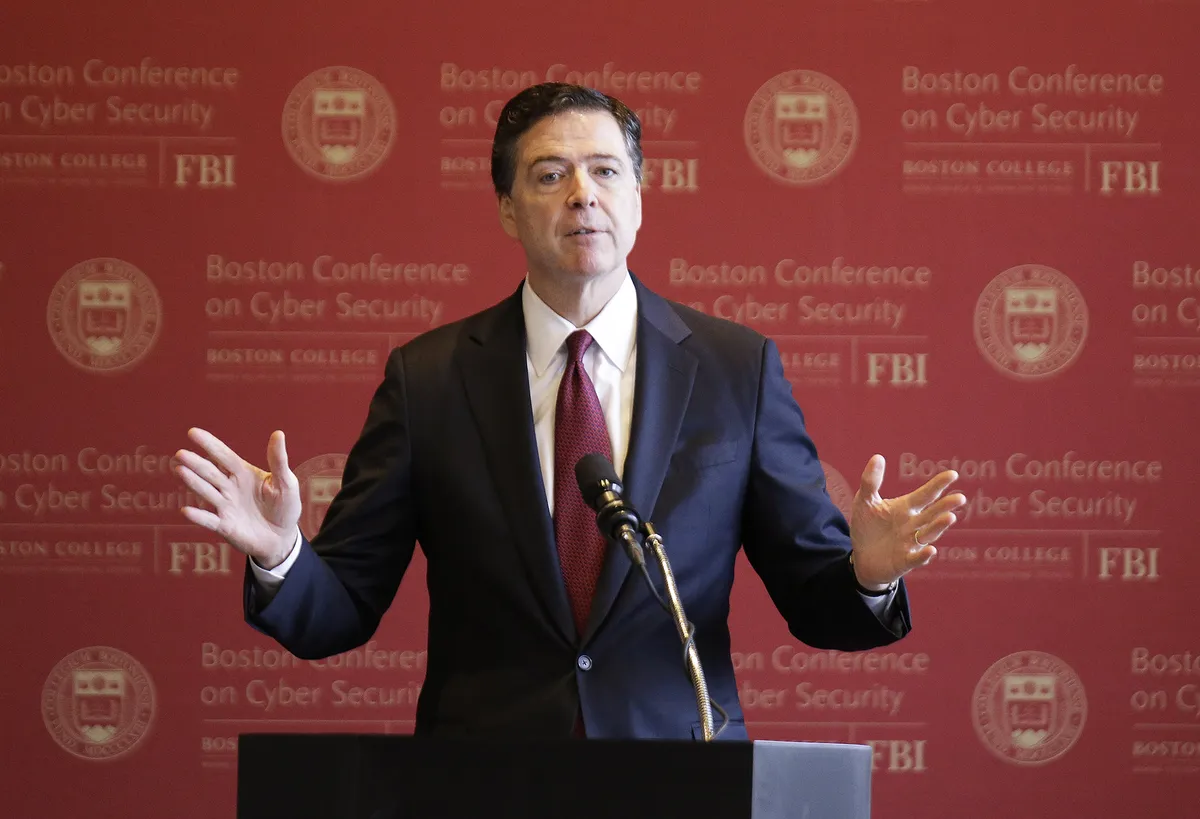
In a surprising turn of events, James Comey has been indicted on federal charges for allegedly threatening President Donald Trump through an Instagram post. The indictment, announced on April 30, 2026, in Greenville, North Carolina, centers around a post featuring seashells arranged to spell ‘8647’. This case raises significant questions about the intersection of free speech and political accountability.
The federal prosecutors claim that Comey knowingly transmitted a threat in interstate commerce. The number ’47’ in the arrangement refers to Trump as the 47th president, while the meaning of ’86’ is debated—some interpret it as a call for removal or violence. The charge carries a maximum penalty of 10 years in prison, which has sparked discussions about the implications of such legal actions against a former FBI director.
Comey has publicly denied any wrongdoing, stating, “I didn’t realize some folks associate those numbers with violence. It never occurred to me, but I oppose violence of any kind so I took the post down.” His defense suggests that his intention was not to threaten but rather to convey a political message.
This case is not Comey’s first brush with legal troubles. Previously, he faced charges in Virginia that were dismissed by a federal judge. Still, this indictment has drawn attention due to its potential ramifications for First Amendment rights and prosecutorial independence in the United States.
Key facts about the indictment:
- Comey is accused of threatening the president through an Instagram post.
- The seashell arrangement ‘8647’ is at the center of the controversy.
- The case has been assigned to US District Judge Louise Flanagan.
Legal experts are divided on the strength of the indictment. Evan Gotlob remarked, “It’s a very weak indictment, and it doesn’t seem to me that it’s a chargeable case.” In contrast, defense attorney Todd Blanche acknowledged the seriousness of threatening a sitting president but emphasized the need for careful scrutiny over what constitutes a legitimate threat versus political expression.
As this case unfolds, Comey is expected to challenge the indictment in court. His initial court appearance will take place in Greenville, North Carolina. Meanwhile, many are left wondering how this situation might influence future discussions regarding free speech and political discourse in America.
While Comey’s legal team prepares their defense strategy, uncertainties linger around how this case will impact broader conversations about free speech rights and political accountability. The exact implications remain unclear as officials continue to navigate these complex issues.
 Yaw Appiah
 Evelyn Mensah
 Kwame Ofori
 Ama Serwah