
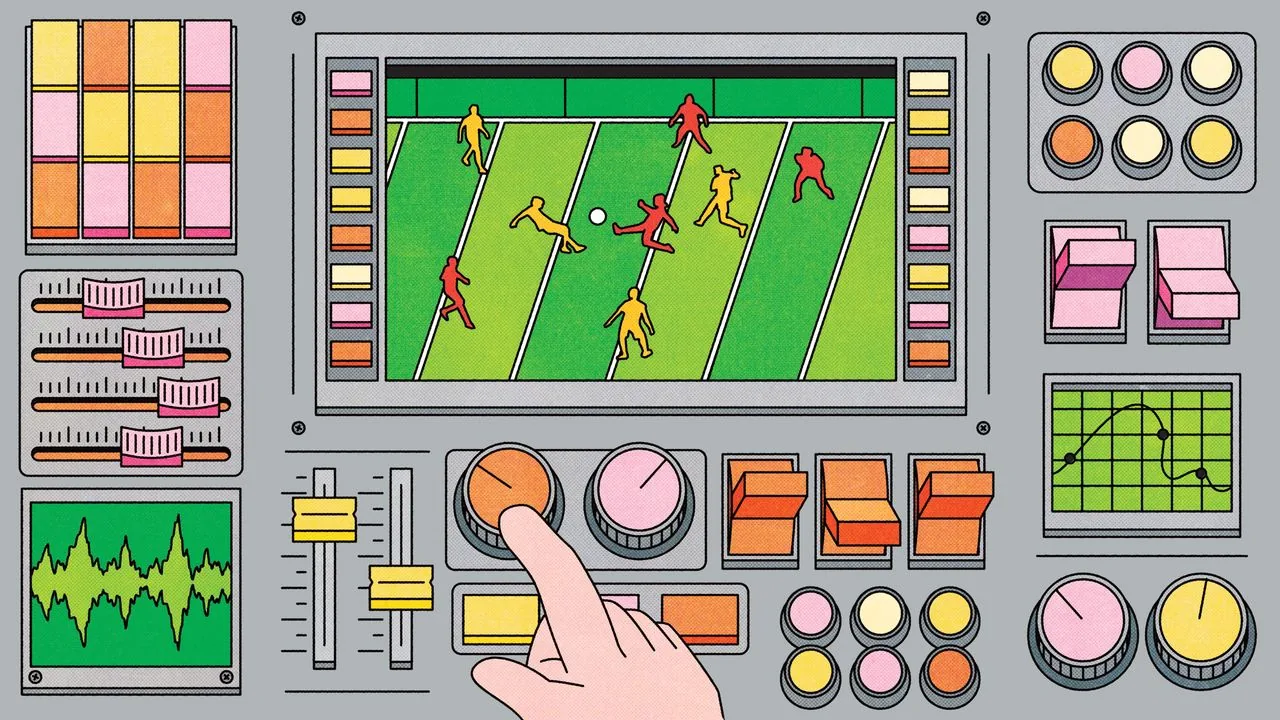
FIFA has announced a change in its Video Assistant Referee (VAR) operations for the World Cup semifinals, opting to station VAR officials directly at the match venues. This decision follows a period of scrutiny regarding several refereeing calls during the knockout rounds of the tournament.
Previously, VAR officials operated from a centralized hub located at the International Broadcast Center in Dallas. This setup was in place regardless of the match location, with testing of on-site VAR occurring at select matches until the quarterfinal stage. The new approach aims to enhance technical reliability and mitigate further controversies.
The quarterfinals saw multiple disputed refereeing decisions. Incidents included calls during England’s 2-1 victory against Norway and officiating that reportedly benefited Lionel Messi’s Argentina in their match against Switzerland. These hotly contested calls have brought refereeing standards and the officials overseeing critical fixtures under intense examination.
For the upcoming semifinals, each match will have a lead VAR official and a backup VAR official present at the stadium. These on-site officials will serve as a contingency measure, ensuring that reviews can proceed without interruption even if communication or technical issues arise with the Dallas hub. This means that if contact is disrupted, officials within the stadium will be able to review incidents and guide the referee.
Dan Hunt, an owner of FC Dallas and a member of the FIFA World Cup Organizing Committee, commented on the change, acknowledging the inherent difficulties in managing games on a large field with a limited number of officials. He expressed satisfaction with the move to on-site VAR, though he also noted uncertainty about the communication process.
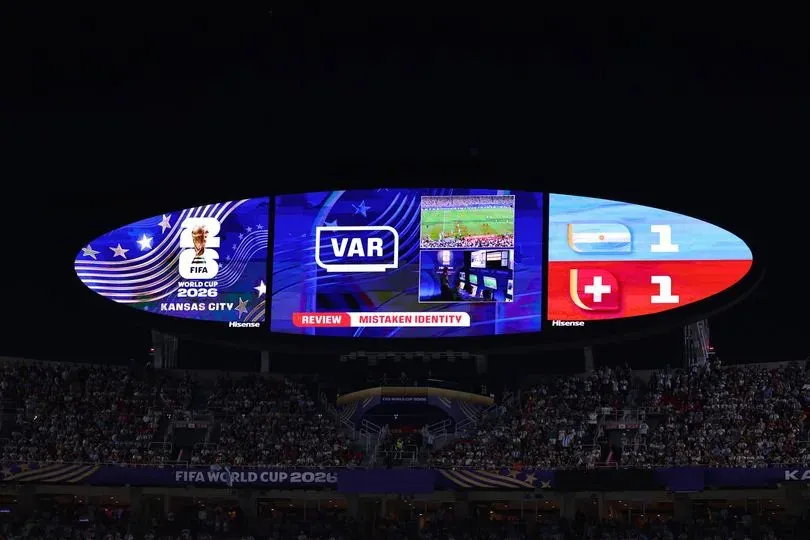
The role of VAR in football has been a subject of ongoing debate. The system, which allows officials to review game-changing decisions using multiple camera angles, has been criticized for its perceived lack of transparency and for sometimes creating more controversy than it resolves. Some observers suggest that the remote nature of VAR operations, where officials are unseen, can lead to speculation and distrust among fans.
Concerns have also been raised about the impact of VAR on the flow of the game and the fan experience. For instance, during a match where American striker Folarin Balogun received a red card, the replay was not shown on the stadium’s big screen, leading to confusion among spectators. This practice has prompted questions about whether such blackouts are intended to manage crowd reactions to contentious decisions.
Semifinal Appointments and Key Officials
The semifinal match between Spain and France will be officiated by Ivan Barton. He will be assisted by David Moran from El Salvador and Nicaragua’s Antonio Pupiro. This trio has worked together in Barton’s previous three matches in the current World Cup and regularly serves on his officiating crew in CONCACAF and FIFA competitions.
Barton has garnered attention during this World Cup, notably becoming the first referee to issue a red card for mouth-covering to Paraguay’s Miguel Almiron. Despite Almiron’s sending off, Paraguay maintained their 1-0 lead over Turkiye, playing with ten men for the entire second half.
Serving as the primary VAR official for the semifinal will be Poland’s Tomasz Kwiatkowski. Kwiatkowski is an experienced video referee who previously oversaw the VAR operation for the 2022 World Cup final between France and Argentina. He will be supported by Dutch official Dennis Higler and Mexico’s Guillermo Pacheco.
Broader Implications of VAR
The implementation of VAR has intensified discussions about fairness and impartiality in football. Some argue that the system’s supposed precision, which can detect minor infractions like a fraction of a toe being offside, can sometimes violate the spirit of the game. The perceived infallibility of VAR has also led to accusations of bias, particularly in the context of high-stakes matches and the performance of certain teams.
The debate around VAR extends to the broader question of technology’s role in sports officiating. While systems like Hawk-Eye in tennis and the Automated Ball-Strike Challenge System in baseball have gained acceptance, VAR in football continues to face resistance. This difference is partly attributed to the high-consequence nature of VAR decisions in football, which often occur during pivotal moments of a match.
The move to on-site VAR officials for the semifinals represents a significant operational adjustment by FIFA in response to these ongoing discussions.
Source: sports.yahoo.com
 Ama Serwah
 Yaw Appiah
 Evelyn Mensah
 Kwame Ofori