
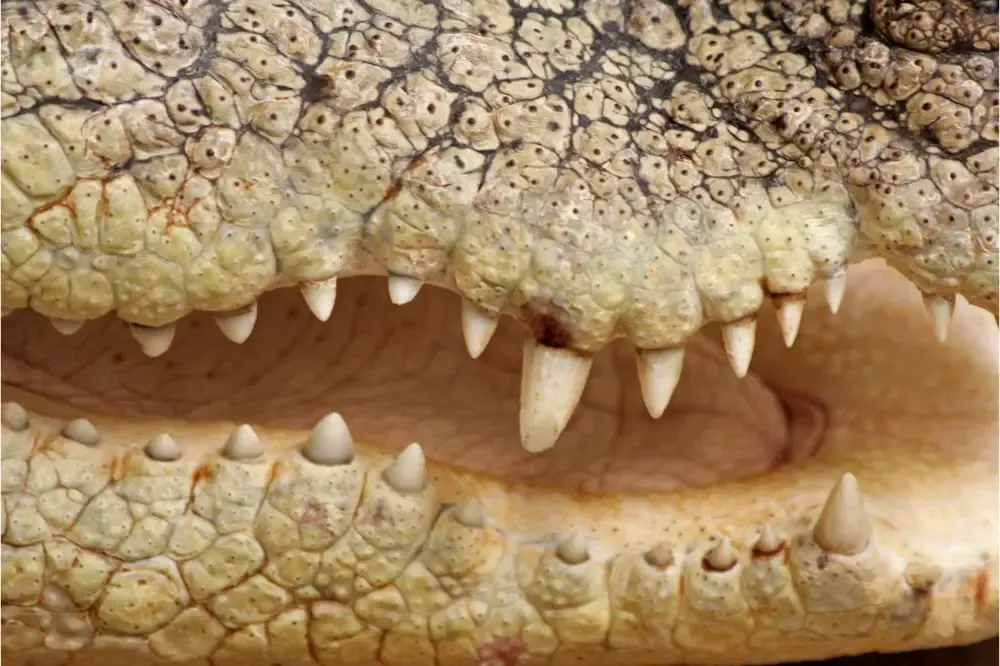
The discovery of two 210-million-year-old crocodile cousins in New Mexico offers a fascinating glimpse into the evolution of early reptiles just before dinosaurs took over the planet. These fossils, uncovered at the Peabody Museum of Natural History at Yale University, represent a pivotal moment in the diversification of proto-crocodiles.
Researchers identified the two species as Hesperosuchus agilis, a long-snouted predator that thrived near rivers and streams, and Eosphorosuchus lacrimosa, a newly recognized species with powerful jaws for capturing larger prey. The fossils were remarkably preserved due to a flash flood that occurred around the time of their demise.
This discovery is significant not only because it adds to our understanding of these ancient creatures but also sheds light on how diverse ecosystems were even before the Age of Reptiles. During the Triassic period, two major reptile lineages competed for dominance—one leading to modern crocodiles and alligators, while the other evolved into dinosaurs and birds.
Key insights from the fossil discovery:
- The fossils date back 210 million years, marking an important era in reptilian evolution.
- Eosphorosuchus lacrimosa stands out as one of the few well-preserved early crocodile relatives.
- These findings illustrate the functional diversification within the lineage that would eventually lead to modern crocodiles.
- The ecosystem at that time was rich enough to support various specialized feeding anatomies among its inhabitants.
Margulis-Ohnuma, a paleontologist involved in this research, remarked, “Eosphorosuchus is one of only a handful of well-preserved early crocodile relatives, and its coexistence with Hesperosuchus represents the ‘dawn’ of functional diversification in the lineage that would give rise to modern crocodiles.” This statement underlines how crucial these findings are for understanding evolutionary pathways.
The implications of this fossil discovery extend beyond academic interest; they provide vital context about ecological dynamics during a transformative period in Earth’s history. As we uncover more about these ancient creatures, we gain insights that enrich our understanding of biodiversity’s roots.
 Evelyn Mensah
 Kwame Ofori