
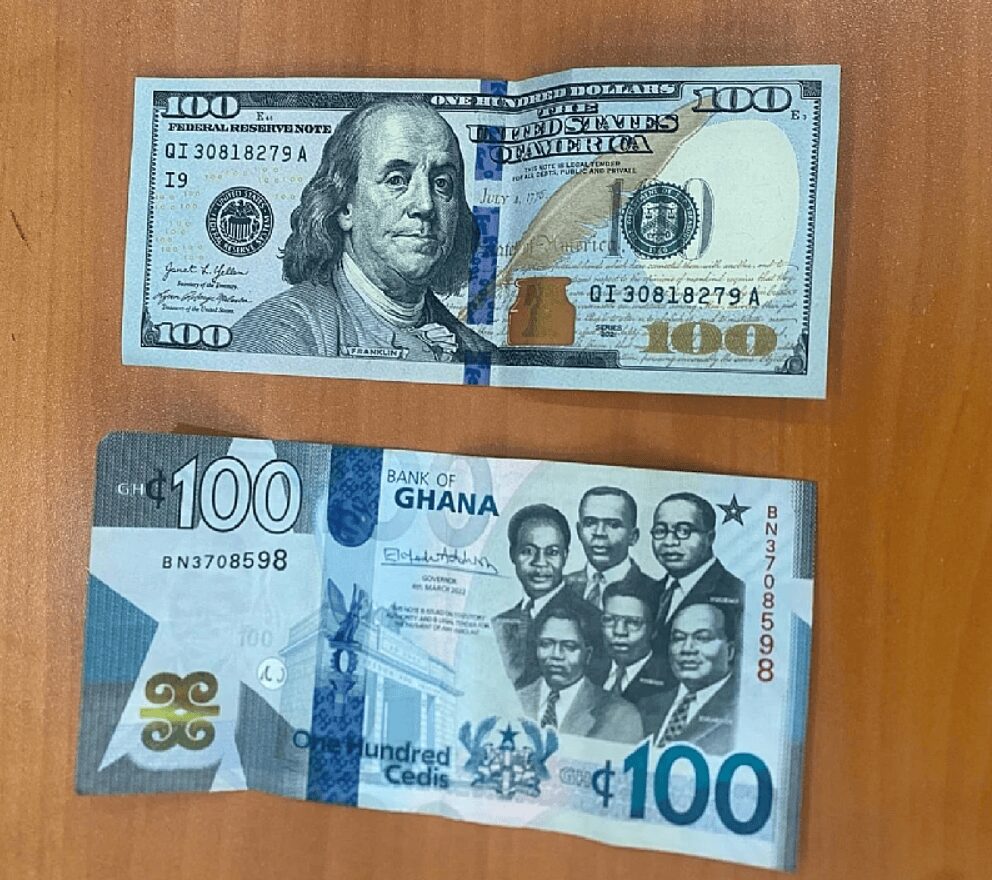
Business readers in Ghana usually need a direct USD to GHS answer before checking invoices, supplier quotes, travel budgets, remittance values, or price lists. On 8 June 2026, the live market reference for $1 to cedis is about 11.80 to 11.82 Ghana cedis, depending on the rate source and whether the value is shown as a spot rate or mid-market converter rate. That means 1 dollar to cedis gives a small base unit, while larger business amounts should still be checked against the rate used by a bank, Forex bureau, or transfer app. The Bank of Ghana publishes Interbank reference rates, while public market trackers and converters can move during the day. The practical answer is therefore about GHS 11.82 before fees, spreads, or provider margins.
Current exchange rate for $1 in Ghana cedis
The current dollar rate in Ghana is not one fixed retail number for every user. Trading Economics listed USD/GHS at 11.8046 on 8 June 2026, while Wise showed $1 USD = 11.82 GHS on the same date. A person checking 1 dollar to Ghana cedis can use these values as a market guide, but the amount received in a bank or mobile money transaction may be slightly lower or higher. For a simple estimate, one dollar to cedis can be rounded to GHS 11.82. For accounting, cash exchange, or invoice settlement, the exact provider quote should be checked before confirming a transaction.
USD to GHS conversion table
The table below uses a working estimate of 1 USD = 11.82 GHS. It is useful for quick business planning, but it is not a guaranteed retail exchange quote. When a business compares 1 dollar to cedis, the same multiplication method can be used for larger amounts. The basic USD/GHS question becomes more important when the payment includes margins, transfer fees, or a different sell rate.
| USD amount | Approximate GHS value |
| $1 | GHS 11.82 |
| $5 | GHS 59.10 |
| $10 | GHS 118.20 |
| $50 | GHS 591.00 |
| $100 | GHS 1,182.00 |
This conversion table helps readers check $1 in Ghana cedis and then scale the value for common business amounts. The same method applies when comparing supplier quotes, import costs, freelance invoices, or travel expenses. If the exact rate changes to 11.80 or 11.85, every converted amount should be recalculated before payment. A quick 1 dollar to cedis check is useful, but a confirmed transaction rate is safer for records.
Buy rate vs sell rate in Ghana
The buy rate and sell rate explain why public exchange values can differ from the amount a customer receives. A bank or Forex bureau buys dollars at one rate and sells dollars at another, with the gap forming the spread.
- Buy rate: Used when a customer sells USD and receives GHS.
- Sell rate: Used when a customer buys USD using GHS.
- Spread: The difference between buy and sell rates.
- Provider quote: The final rate shown by a bank, bureau, or app before confirmation.
This is why 1 dollar to Ghana cedis may look different on a converter, at a bank counter, and in a mobile transfer app. For one dollar to cedis, the visible online number may not match the final branch or app rate. For larger business conversions, even a small spread can change the final GHS total.
Where to exchange dollars in Ghana
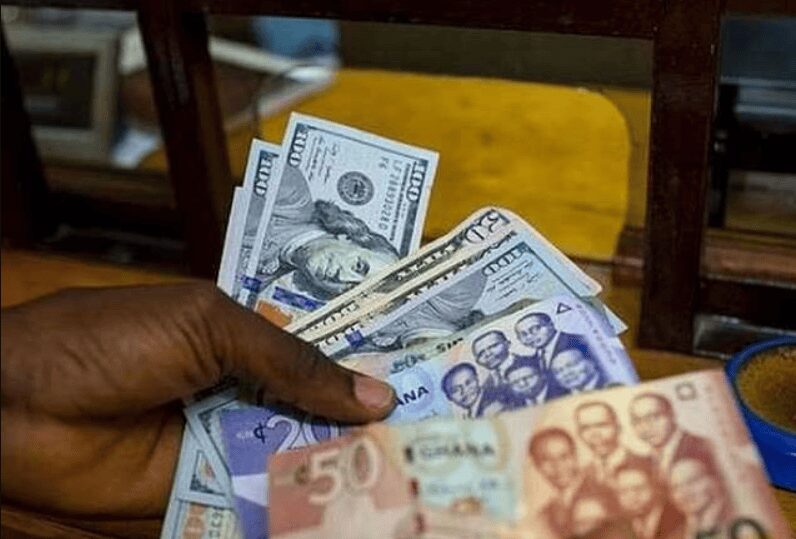
Businesses and individuals in Ghana usually compare several exchange routes before converting money. Banks are useful for formal records, business accounts, and larger transfers. Forex Bureaux can be convenient for cash exchange, especially when a person needs a visible buy or sell quote before handing over notes. Mobile money and transfer apps can help with speed and tracking, but the rate may include a margin. MTN Mobile Money and Vodafone Cash/Telecel routes can appear in Ghana payment flows, while the final rate depends on the connected provider. Vodafone Ghana was rebranded to Telecel, so older “Vodafone Cash” wording may appear beside current Telecel naming.
Choosing the right exchange route for USD to GHS conversions
The right place to exchange depends on the purpose. Importers may prefer bank documentation, travellers may compare Bureaux, and freelancers may check transfer apps. A business that checks 1 dollar to cedis today should compare the live market value with the quoted customer rate before accepting a conversion. A person checking 1 dollar to Ghana cedis should also confirm whether the rate is for buying USD, selling USD, cash, transfer, or mobile money credit.
Fees and margins that change the GHS amount
Fees and margins can make the final GHS amount different from a simple online conversion. A public rate may show the mid-market value, but a bank, bureau, or transfer provider may include a spread. Some services also charge a fixed transfer fee, while others build the cost into the exchange rate. For small amounts, a fixed fee can be noticeable. For larger amounts, a small margin can have a bigger total effect.
A simple example shows the difference. If 1 dollar to Ghana cedis is estimated at GHS 11.82, then $100 is about GHS 1,182 before costs. If a provider applies a weaker customer rate or adds a transfer fee, the final amount can be lower. The same issue applies to 1 dollar to cedis when it is used as the base for invoices or pricing. The cleanest business method is to record the source, time, rate type, and final converted GHS value.
Historical trends for USD/GHS
Recent history shows why businesses should refresh the exchange rate often. Wise reported that the USD/GHS rate moved between a high of 11.8313 and a low of 11.7482 over the previous seven days, with an average of 11.8027. Trading Economics reported USD/GHS at 11.8046 on 8 June 2026 and said the cedi had weakened by 4.56% over the previous month and by 15.59% over the previous 12 months. These movements affect import pricing, dollar invoices, savings decisions, travel budgets, and remittances.
The longer trend shows why one dollar to cedis is not a permanent value. A rate used last month may be outdated today, so businesses need a clear update rule for USD quotes and GHS payments. Anyone checking dollar to Ghana cedis should look beyond one number and consider recent movement before pricing or conversion.
How to check the latest rate
The Bank of Ghana is the key official source for Interbank reference rates. Its daily Interbank page explains that reference rates are computed from transaction data submitted by banks, including spot USD/GHS transactions concluded before the reporting cutoff. That source is useful for official context, while converters such as Wise and market trackers such as Trading Economics can show frequently updated market-style values. Forex Bureaux and bank rate pages then show customer-facing rates, which may differ from the Interbank or mid-market figure.
- Bank of Ghana: Use it for official Interbank context and market reference.
- Bank rate page: Compare customer buy and sell quotes before larger transactions.
- Forex bureau: Ask for the displayed cash rate and confirm whether commission applies.
- Mobile money or transfer app: Check the exact rate shown before confirming the payment.
- Accounting record: Save the rate, source, date, and final GHS value for reconciliation.
This approach keeps 1 dollar to cedis today useful for business decisions. It also helps readers avoid mixing a mid-market chart with the final amount paid by a provider.
Practical business examples
A small importer checking a $100 supplier invoice can estimate the cost at about GHS 1,182 before fees. A freelancer receiving $50 can estimate about GHS 591 before the receiving platform applies its own rate. A traveller exchanging $10 can expect about GHS 118.20 before bureau spreads. These examples show why 1 dollar to cedis is a starting point, not a full settlement figure. The final rate depends on where the exchange happens.
For business records, the source matters as much as the number. If the invoice uses 1 dollar to Ghana cedis from a bank quote, the company should store that quote with the transaction. If a mobile app uses a different rate, the final receipt should be kept. If a client needs a quick USD/GHS answer, the safest method is to give the live estimate and explain that buy/sell rates can change the paid amount.
Summary for Ghana exchange rate readers
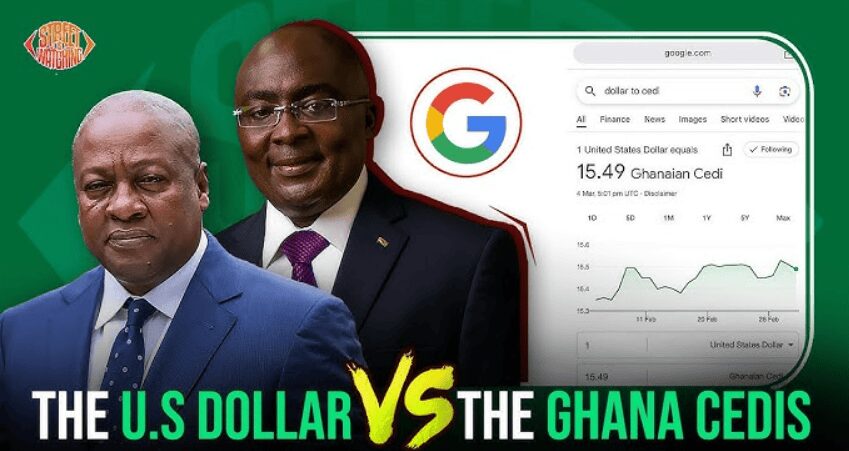
The current working estimate for $1 to cedis is about GHS 11.82 on 8 June 2026. This gives a quick conversion base, but banks, Forex Bureaux, and mobile money providers may apply different rates. For everyday planning, one dollar to cedis works as a simple reference, while business payments need a dated source and confirmed final GHS amount.
| Pros | Cons |
| A quick $1 rate helps readers estimate common USD to GHS amounts. | The final provider rate may differ from a public market chart. |
| Buy and sell rates make real exchange costs easier to understand. | Spreads and fees can reduce the final amount received in GHS. |
| Historical trends help businesses plan invoices and pricing. | Old rates can become inaccurate if USD/GHS moves quickly. |
| A dated source improves accounting and payment records. | Different banks, bureaux, and apps may show separate quotes. |
FAQ about dollar to cedis exchange rates
How much is 1 dollar in Ghana cedis today?
On 8 June 2026, how much is 1 dollar in Ghana cedis can be answered at about GHS 11.82 using a mid-market style estimate. Some live market sources showed about 11.80, so the practical range is close. The final customer amount can differ if a bank, bureau, or app applies a spread.
Why is the bank rate different from an online converter?
Online converters often show mid-market or market reference values. Banks and Bureaux usually show customer buy and sell rates, which include a spread. That is why 1 dollar to cedis can differ between a chart and a real exchange counter.
What is the best source for business records?
For official reference, businesses can check Bank of Ghana Interbank data. For the actual transaction, they should keep the bank, Forex bureau, or transfer app receipt. The best record shows the source, rate, date, and final GHS amount.
How often should businesses check USD/GHS?
Businesses should refresh the dollar to cedis rate before sending invoices, paying suppliers, or converting larger amounts. The recent USD/GHS movement shows that old quotes can become inaccurate. Regular checks make 1 dollar to Ghana cedis more useful for pricing and cash-flow planning.
 Kwame Ofori
 Ama Serwah
 Yaw Appiah
 Evelyn Mensah