
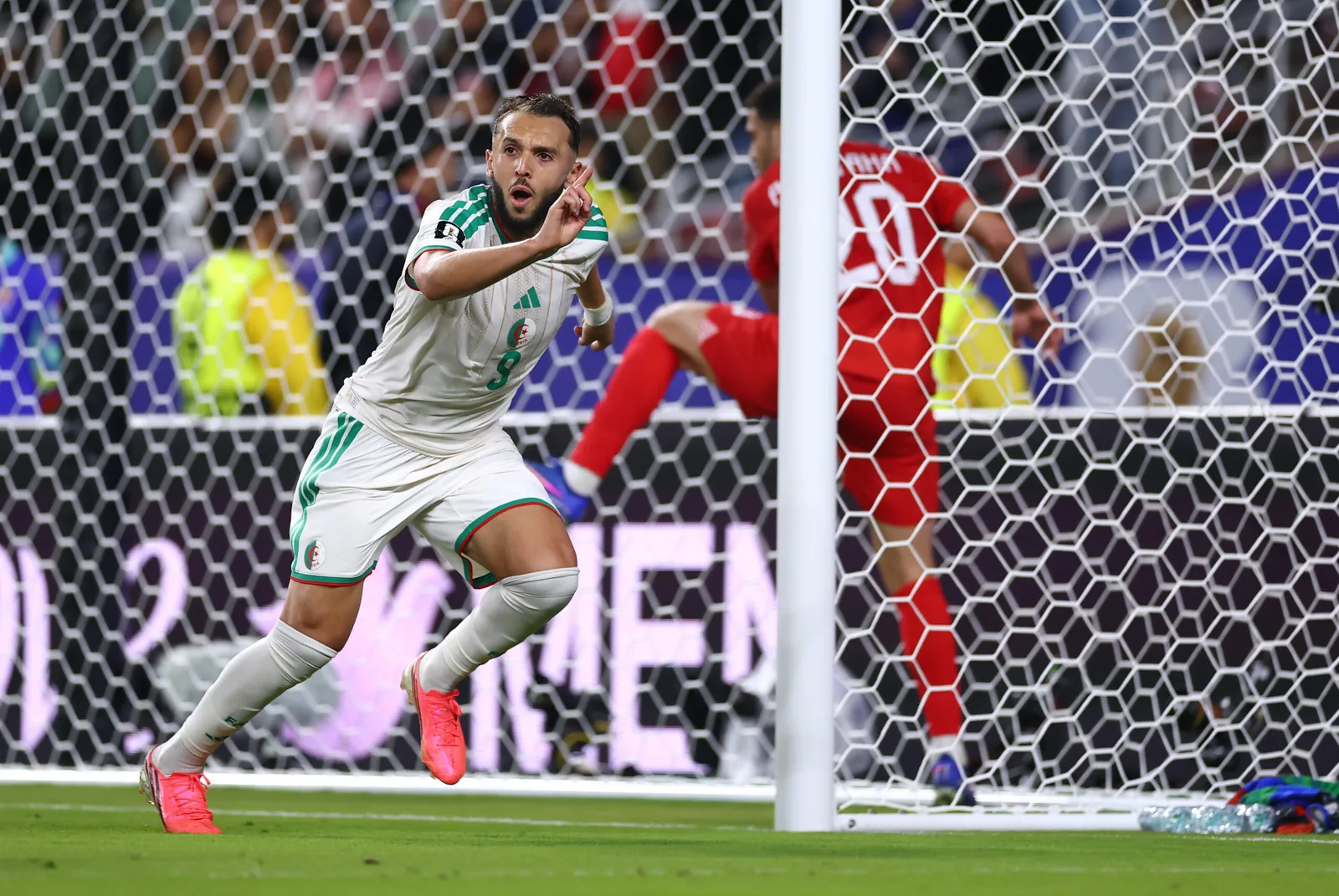
First Half Action and Jordan’s Breakthrough
The FIFA World Cup Group J match between Jordan and Algeria saw Jordan taking an early lead. The game, held at the San Francisco Bay Area Stadium in Santa Clara, California, marked the first FIFA World Cup meeting between the two nations. Their last encounter was a friendly match in Algeria in May 2004, which ended in a 1-1 draw.
During the first half, Algeria maintained the bulk of possession, holding 55% compared to Jordan’s 33%. Despite this, Jordan proved more effective with their time on the ball, registering 6 shots to Algeria’s 4, with 3 of Jordan’s shots on target compared to Algeria’s 2. The crucial moment arrived in the 36th minute when Nizar Al-Rashdan scored the opening goal for Jordan.
The goal came amidst a chaotic scene in the penalty area where Algeria struggled to clear the danger. Al-Rashdan capitalized on a miscue, putting the ball past Algeria’s goalkeeper, Luca Zidane. This marked Jordan’s first lead in a World Cup match. Algeria’s captain, Riyad Mahrez, had a notable opportunity earlier, timing his run perfectly to pounce on a long ball, but his toe poke was blocked.
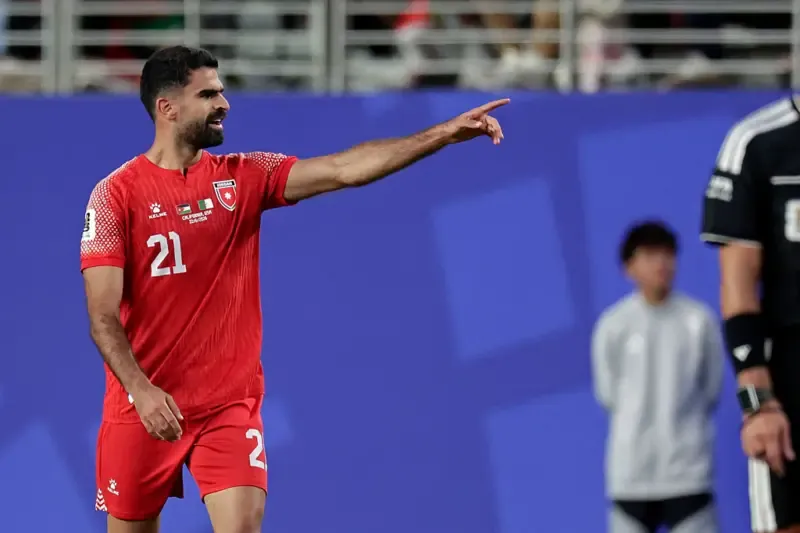
Jordan’s attacking play continued, with Ali Olwan attempting a shot that went straight to the keeper, though it appeared to be offside. As half-time approached, Algeria seemed content to hold out despite trailing by a goal, with a long cross to the left attacking thirds resulting in a throw-in for Jordan.
Second Half Developments and Algerian Pressure
As the second half commenced, Algeria’s coach, Vladimir Petkovic, made a couple of changes to inject some spark into his team, bringing on Nabil Bentaleb and Nadhir Benbouali, while Hicham Boudaoui and Ramiz Zerrouki made way. Algeria immediately began to search for space and gaps in Jordan’s defense, with Jordan focused on defending their lead.
In the 51st minute, Algeria earned a free kick in a dangerous area, and Mahrez delivered a tempting cross, which Jordan’s keeper, Abulaila, cleared with an emphatic fist. Algeria continued to press, creating an opening for Ibrahim Maza in the 54th minute, whose powerful strike towards the far post was punched clear by Abulaila, with Aït-Nouri firing the rebound wide.
Jordan also showed moments of danger, particularly through Musa Al-Taamari, who burst into the penalty area but was closed down before he could get a shot away. Ali Olwan, a key threat for Jordan, also popped up in space to pick out Al-Taamari, indicating Jordan’s continued offensive capabilities. Noor Al-Rawabdeh blasted a shot from range that flew over the crossbar in the 63rd minute.
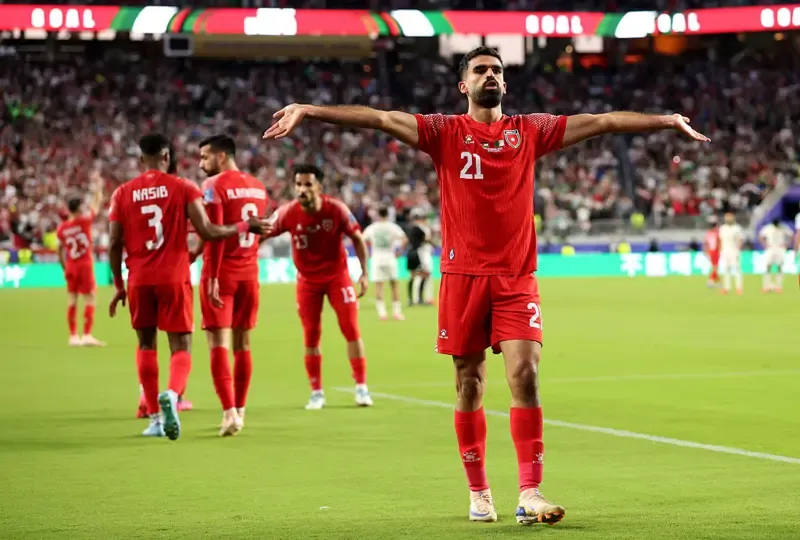
Algeria’s pressure intensified, with Bentaleb picking out Benbouali inside the penalty area in the 64th minute. Benbouali’s header lacked power and was collected by Abulaila. Mahrez also picked out Maza on the edge of the six-yard box from a free kick, but a defensive flick intervened. Algeria had been pressing with multiple free kicks, and Nadhir Benbouali eventually scored with a header, though a VAR check was initiated due to concerns over an offside leading up to the goal. The VAR check was completed, and Algeria’s lead was confirmed.
Late Game Changes and Continued Threat
As the game progressed, both teams made further substitutions. In the 77th minute, Algeria replaced captain Riyad Mahrez with Anis Hadj Moussa, while Jordan brought on young attacker Odeh Al-Fakhouri for Mahmoud Al-Mardi. Ibrahim Maza continued to be a threat for Algeria, taking a shot that was saved by Abulaila, leading to a corner.
Algeria’s attacking efforts were evident with eight shots in the second half compared to Jordan’s two, as Jordan had initially adopted a more defensive posture. Farès Chaïbi tested Abulaila with a shot from distance in the 73rd minute. In the 85th minute, a mass of changes occurred on both sides, with Algeria aiming to hold their lead and Jordan seeking to regain momentum. Amine Gouiri and Rayan Aït-Nouri were replaced by defenders Jaouen Hadjam and Zineddine Belaid for Algeria. In the 88th minute, Algeria continued to slow the game down, with Maza taking a shot that was easily collected by the Jordan keeper.
| Team | Played | Won | Drawn | Lost | Goals For | Goals Against | Goal Difference | Points | Form, Last 6 games, Oldest first |
|---|---|---|---|---|---|---|---|---|---|
| 1 Mexico | 2 | 2 | 0 | 0 | 3 | 0 | 3 | 6 | No Result No Result No Result No Result… |
| 2 South Korea | 2 | 1 | 0 | 1 | 2 | 2 | 0 | 3 | No Result No Result No Result No Result… |
| 3 Czech Republic | 2 | 0 | 1 | 1 | 2 | 3 | -1 | 1 | No Result No Result No Result No Result… |
| 4 South Africa | 2 | 0 | 1 | 1 | 1 | 3 | -2 | 1 | No Result No Result No Result No Result… |
The match saw Jordan’s manager, Jamal Sellami, employing a 3-4-2-1 formation, while Algeria’s manager, Vladimir Petkovic, opted for a 4-2-3-1 formation. Jordan had previously shown strong dribbling statistics in their opening match against Austria, completing 15 dribbles, which was the most by a side making their FIFA World Cup debut since Côte d’Ivoire against Argentina in 2006. Algeria, on the other hand, had suffered a 3-0 defeat to Argentina on Matchday 1, which was their joint-heaviest at the FIFA World Cup.
Jordan remains a serious threat on the counter-attack, as demonstrated by a long ball from Mahmoud Al Mardi that was well-read and cleared by Rayan Ait-Nouri.
Source: bbc.co.uk
 Ama Serwah
 Yaw Appiah
 Evelyn Mensah