
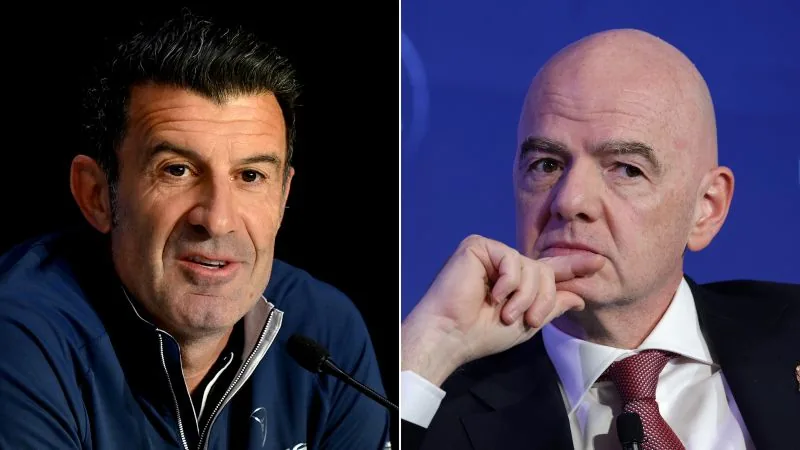
Infantino’s position under scrutiny
Fifa president Gianni Infantino is scheduled to meet with senior leaders of football’s global governing body on Wednesday in Rabat, Morocco. This meeting comes as criticism intensifies regarding his recently abandoned plan to sell off Fifa’s commercial and event operations. The gathering is understood to be taking place at Fifa’s Africa office and will include key figures such as secretary general Mattias Grafstrom and members of the Fifa management board.
Among those expected to attend are finance chief Thomas Peyer, legal chief Emilio Garcia Silvero, chief of staff Daniel O’Toole, chief of member associations Elkhan Mammadov, and media relations director Bryan Swanson. The precise intention of the meeting is unclear, but it is anticipated that Infantino will aim to mend relationships and secure his position.
The controversy stems from an internal memo sent by Grafstrom to Fifa staff, which was highly critical of the proposed plan. Additionally, chief of global football development Arsene Wenger stated he was not involved in Infantino’s Fifa Forward Enterprise proposal, describing its abortion as “absolutely necessary and beyond question.”
Prince Ali, president of the Jordanian Football Association, has accused Fifa of creating a situation that “amounts to blackmail” concerning unpaid prize money and support for Infantino’s re-election. While Fifa has not commented on these claims, Prince Ali’s statement reflects strong opposition among some member associations.
Uefa recently expressed a loss of confidence in Infantino’s leadership. Several member associations, including Wales, have withdrawn support for his re-election, with England reportedly set to follow. This widespread criticism marks a significant shift, as Infantino had reportedly received pledges of support from a large number of member federations for his re-election bid just weeks prior.
Mounting pressure and key questions
The pressure on Infantino has been further amplified by comments from soccer legend Luis Figo, who publicly stated that Infantino “must go.” Figo described Infantino’s conduct as “the lowest, most deceitful and cravenly self-interested behaviour I have ever witnessed” in an op-ed. He argued that the individual attempting to force through such major changes for personal gain should not be part of the game’s future.
Figo criticized the plan to set up a separate entity with private investors to control commercial and operational rights for the World Cup, calling it “not a good idea.” He highlighted concerns about transparency regarding returns sought by private equity and the permanent loss of ownership once shares are sold.
Carlos Cordeiro, Infantino’s senior adviser on global strategy and governance, resigned last Friday over the plan, calling it “a bad deal for football” that would “mortgage football’s future.” Cordeiro raised several fundamental questions that Infantino will likely face at the meeting, including the rationale behind the deal, the timing, oversight mechanisms, beneficiaries, competitive process, governance structure, and the ultimate gains for investors versus the cost to football.
These questions, according to Cordeiro, remain largely unanswered, yet member associations were given a deadline of 19 September to approve the plan to avoid missing out on additional funding. Kevin Lamour, Fifa’s chief operating officer, previously stated that the private investment plan was “the project of one person” and that Fifa’s own administration was “deceived.”
In his letter to Fifa staff, Grafstrom characterized the events of the past week as “a sad and reproachable series of events” that were “difficult to comprehend and accept.” Infantino may need to demonstrate contrition and propose reforms, such as implementing additional checks and balances, to regain the trust of his inner circle.
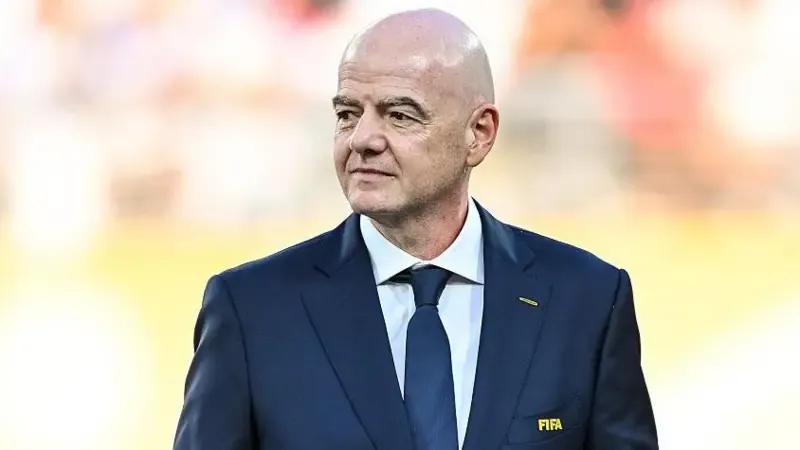
Potential paths forward
Despite the intense criticism, it appears unlikely that Infantino will resign by the end of Wednesday. He has shown no indication of relinquishing his position and has been actively rallying support, with countries like Egypt, Morocco, Niger, Mauritania, and the DR Congo issuing statements in his favour. Morocco, where Infantino has been based recently, is considered friendly territory for him, with its national football association supporting him and the country hosting the next World Cup.
However, Infantino will still need to address serious questions about what has been a controversial week for Fifa. Some attendees at the meeting may question his ability to navigate the current situation, especially given the strong opposition from European countries. It is possible that Infantino may issue a statement including an apology and a promise of change.
If Infantino chooses to continue in his role, Uefa and other confederations may explore alternative avenues to remove him. One option is for the Fifa Council to call an emergency meeting, which would require 19 of the 37 council members to request it. However, there are doubts that the necessary 19 votes could be secured.
Another potential step is an extraordinary congress of the 211 Fifa member associations. This would be triggered if one-fifth, or 43 associations, make a written request. Uefa, with its 55 member nations, has the capacity to initiate such a congress. This process would take a minimum of two months, more likely three, and would effectively be a de facto election requiring 106 votes for a vote of no confidence to pass.
This timeline would provide Infantino an opportunity to regain support from those angered by the investment plan. Uefa would likely only pursue this route if confident of success. The deadline to announce candidacy for the election at the Fifa Congress in March is 18 November. Concacaf president Victor Montagliani is seen as a potential unity candidate to challenge Infantino, who stood unopposed in his re-elections in 2019 and 2023.
Source: bbc.co.uk
 Ama Serwah
 Yaw Appiah
 Evelyn Mensah
 Kwame Ofori