
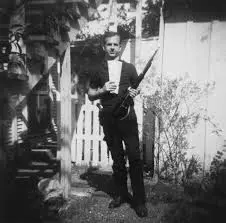
Introduction: The Historical Significance of Lee Harvey Oswald
Lee Harvey Oswald remains one of the most infamous figures in American history due to his alleged role in the assassination of President John F. Kennedy on November 22, 1963. His actions not only changed the course of U.S. politics but also ignited a myriad of conspiracy theories and public speculation that continue to this day. Understanding Oswald’s background and motives provides insight into a pivotal moment in American history.
Early Life and Military Service
Born on October 18, 1939, in New Orleans, Louisiana, Oswald’s childhood was marked by instability and upheaval. His father died before he was born, and his mother moved frequently due to financial difficulties. He eventually enlisted in the U.S. Marine Corps in 1956, where he developed an interest in Marxism and even defected to the Soviet Union in 1959. Oswald returned to the United States with a Russian wife and a growing sense of discontent with American politics.
Assassination of President Kennedy
On that fateful day in Dallas, Texas, Oswald was arrested shortly after JFK was shot while riding in a motorcade. Within two days, he was charged with the assassination. The events surrounding the assassination occurred swiftly: Oswald’s arrest coinciding with the tragic loss of the President, leaving many nation citizens in shock. Oswald maintained his innocence even during intense interrogations, claiming he was a scapegoat.
The Aftermath and Conspiracy Theories
Oswald’s life was cut short when he was shot and killed by nightclub owner Jack Ruby on November 24, 1963, while being transferred to a county jail. This event fueled a plethora of conspiracy theories suggesting that Oswald was part of a larger plot involving government agencies, the Mafia, or foreign powers. The Warren Commission, established to investigate the assassination, concluded that Oswald acted alone, but disbelief and speculation still thrive in popular culture.
Conclusion: The Legacy of Lee Harvey Oswald
Lee Harvey Oswald’s life and actions have sparked endless debate and investigation into his motives and the context of the assassination. The theories surrounding his involvement highlight the complexities of American political life in the 1960s, the public’s trust in government, and the search for truth amidst tragedy. Oswald’s legacy serves as a reminder of how a single event can alter the course of history and the human desire to find answers in the face of uncertainty. As new evidence and interpretations emerge, Oswald’s chapter in American history will undoubtedly remain a topic of interest and inquiry for years to come.
 Evelyn Mensah
 Ama Serwah
 Kwame Ofori