
Three Red Cards in Opening Match
The opening match of the World Cup saw Mexico defeat South Africa 2-0, a game marked by three red cards. This number of dismissals in a single match has not been seen in the tournament for two decades, since the 2006 World Cup. The 2018 and 2022 World Cups each had only four red cards throughout their entire tournaments, making the three red cards in this single match a notable occurrence.
Two South Africa players, Yaya Sithole and Themba Zwane, were sent off. Mexico’s Cesar Montes also received a red card in stoppage time. The referee for the match was Wilton Sampaio.
Controversial Decisions and Refereeing Tone
Yaya Sithole’s red card for fouling Brian Gutierrez was considered a straightforward decision, as Gutierrez was through on goal and Sithole denied a clear goalscoring opportunity. However, Themba Zwane’s dismissal was more controversial. It followed a Video Assistant Referee (VAR) review for violent conduct after a tussle with Roberto Alvarado, where Alvarado went to the ground holding his head.
The VAR, Colombia’s Nicolas Gallo, sent Sampaio to the pitchside screen to review the incident. The replays made it difficult to discern the exact nature of the contact. Zwane appeared to make contact with an open hand, not a clenched fist, which is often an indicator of aggression for VARs when assessing violent conduct. This decision was viewed by some as exceptionally harsh and not a clear and obvious error that VAR was introduced to correct.
The third red card, given to Cesar Montes for denying a goalscoring opportunity to Khuliso Mudau, initially appeared controversial. Mudau was in a wide position, suggesting a yellow card might have been sufficient. However, upon review, it seemed likely that Mudau’s next touch would have been to control the ball inside the penalty area with no covering defender nearby, leading to a probable shot on goal. The VAR did not intervene to overturn the red card, indicating the decision was considered supportable.
Pierluigi Collina, Fifa’s head of referees since 2017, has emphasized that decisions should serve justice. Under his guidance, rules regarding denying a goalscoring opportunity (Dogso) when a penalty is awarded have been relaxed, making it more difficult to receive a red card for such incidents. Before the tournament, Collina’s briefing focused on issues like time-wasting and general player behavior, rather than a crackdown leading to a significant increase in red cards.
Some actions, such as players covering their mouths during confrontations or leaving the field in protest, have led to red cards under Collina’s directives. He also advocates for disallowing goals due to blocking on set-pieces. The incident involving Zwane might fall under the category of poor player behavior that Collina aims to reduce within the game.
Atmosphere at Estadio Ciudad de México
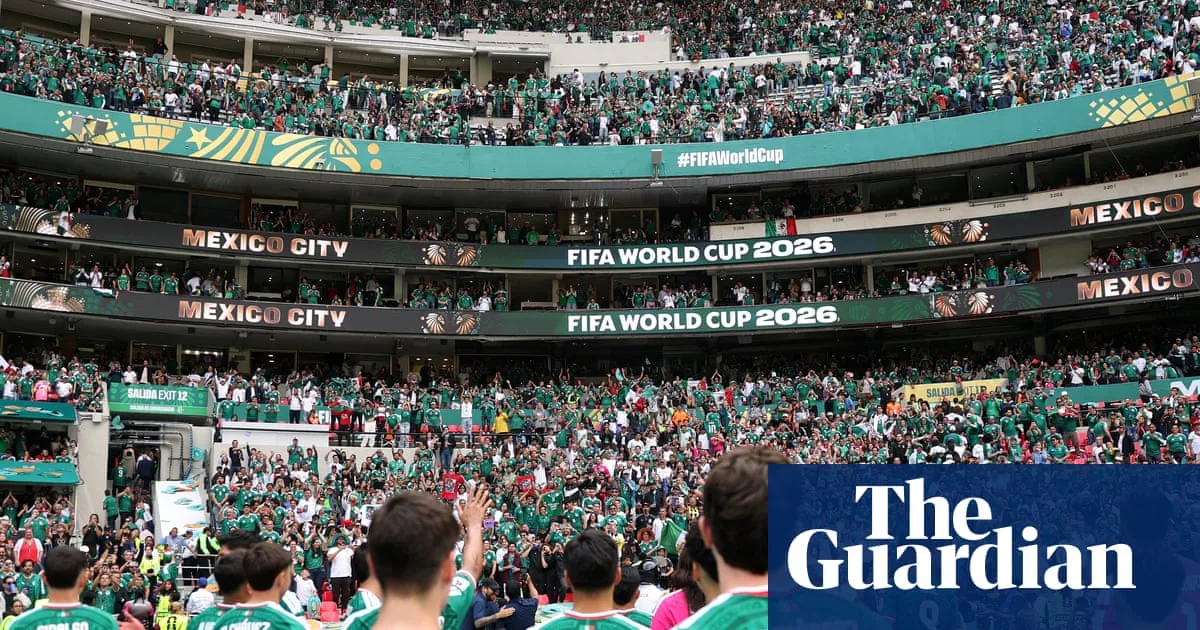
The match took place at Estadio Ciudad de México, also known as the Azteca, in Mexico City. Fans arrived early, with stadium gates opening at 9 am. The atmosphere was festive, with traditional banda music and performers outside the stadium. Despite some ongoing protests in the city, the crowd for the match was enthusiastic.
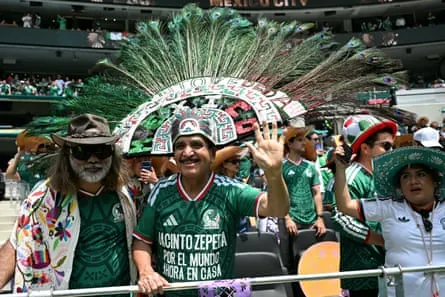
Midfielder Érik Lira noted the strong support from fans along the team’s route to the stadium. Inside, the Azteca, which has undergone significant renovations, was described as vibrant. The tournament organizers incorporated elements of Mexico’s culture into the opening presentation, which was well-received by the crowd.
Mexico secured an early lead with Julián Quiñones scoring in less than ten minutes. The noise in the Azteca was described as thunderous. Mexico head coach Javier Aguirre, who played in Mexico’s 1986 World Cup opener, celebrated the goal with his staff and players. The stadium’s intense atmosphere was noted by Aguirre, who stated it could make opponents’ feet shake.
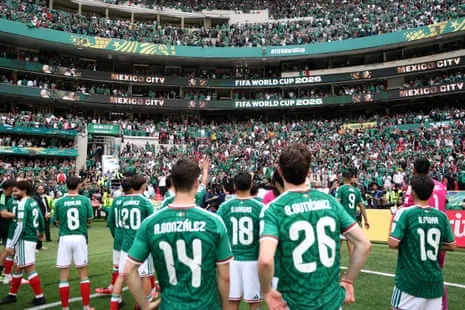
Even with a 2-0 lead, Mexican fans began to whistle at their own team when they attempted to waste time, indicating their high expectations. Aguirre humorously suggested the game should have ended 4-0 and acknowledged the fans’ right to boo. At the final whistle, fans sang “Cielito Lindo,” creating a memorable scene for the 80,824 attendees.
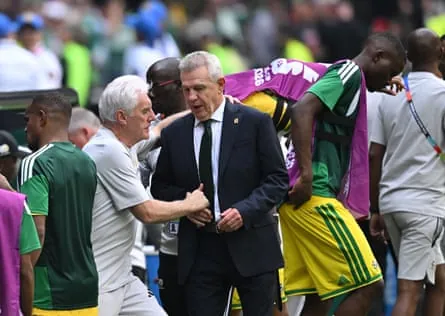
The two on-field red cards in the match were considered correct decisions on balance, despite the initial controversy surrounding some of them.
Read Also
- Ghana prepares for World Cup Group L matches, ticket distribution clarified
- England players hold team-bonding dinner in Miami ahead of World Cup 2026
- Mexico City: Raúl Jiménez scores first World Cup goal after skull fracture recovery
- Mexico secures opening World Cup win as Raul Jimenez completes emotional comeback
Source: bbc.com
 Yaw Appiah
 Kwame Ofori
 Ama Serwah
 Evelyn Mensah