
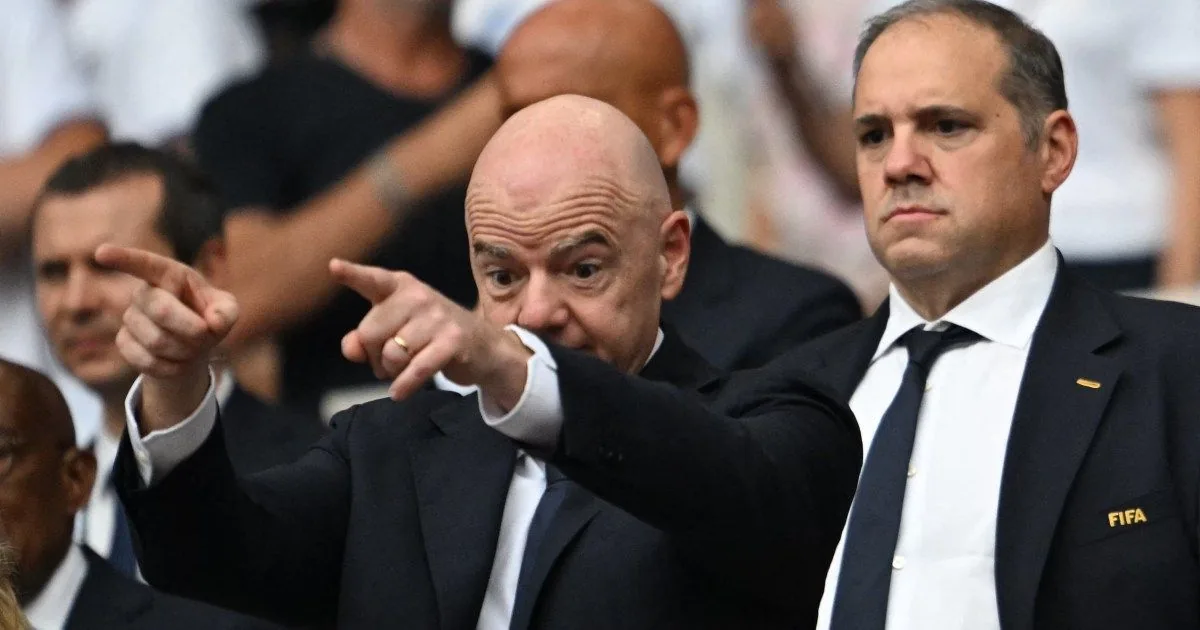
FIFA to consider further expansion
FIFA officials are set to assess the possibility of expanding the World Cup to 64 teams following the conclusion of the 2026 tournament. This proposal, which was initially put forward last year, is gaining traction after the perceived success of the current 48-team format. FIFA president Gianni Infantino indicated that the expansion would be examined by relevant committees.
Infantino emphasized the importance of making the World Cup a global event, not limited to traditional football powerhouses like Europe and South America. He stated that every nation should have the opportunity to dream of participating, highlighting that this incentive encourages smaller countries to improve their football programmes. The quality of teams globally is seen as consistently rising, supporting the argument for broader inclusion.
The current 48-team World Cup, which is the largest to date, has been described as a significant success by Infantino. He pointed to the performance of African teams, with nine out of ten progressing to the knockout stages, as evidence of the benefits of increased participation. This contrasts with previous tournaments where only five African teams were typically involved.
Challenges and differing views
The expansion from 32 to 48 teams was approved by the FIFA council in 2017, taking effect from the 2026 finals. Speculation about further expansion has persisted since then. While a 48-team format was considered for the 2022 tournament, it was determined that Qatar could not host an event of that scale independently.
Hosting a larger tournament presents considerable challenges. The 2026 World Cup is being held across three countries, while the 2030 edition will involve matches in six countries: Morocco, Portugal, Spain, along with Argentina, Paraguay, and Uruguay as centenary hosts. A 64-team tournament, which would feature 128 games, would further complicate logistical arrangements for host nations.
Not all football officials are in favour of further expansion. Uefa president Aleksander Ceferin has called the 64-team proposal a “bad idea,” citing concerns for both the tournament structure and the qualification process. Similarly, Asian Football Confederation president Sheikh Salman bin Ibrahim Al Khalifa warned that further expansion could lead to “chaos.” Victor Montagliani, president of Concacaf, also expressed reservations, suggesting it might damage the broader football ecosystem.
Despite these concerns, Infantino views expansion as a way to engage more countries and potentially increase revenue for member associations. A 64-team World Cup could see nearly a third of FIFA’s 211 affiliated countries qualify. The FIFA council is responsible for making the ultimate decision, though no immediate changes are anticipated.

The 2030 World Cup and its format
The 2030 World Cup will commemorate 100 years since the inaugural tournament in 1930, which featured 13 teams. The first three matches of the 2030 edition are scheduled to be played in Uruguay, Argentina, and Paraguay, with the remainder hosted in Morocco, Portugal, and Spain. An expansion to 64 teams could mean that the South American nations might each host an entire four-team group, rather than just a single match.
The current World Cup, expanded to 48 teams, has seen some smaller nations perform notably. Cape Verde, for instance, advanced to the last 32 after drawing with Spain and Uruguay in the group stages. They were eventually eliminated by Argentina in a 3-2 defeat after extra time. However, other smaller teams like Haiti, Tunisia, Iraq, Jordan, Uzbekistan, and Panama did not secure any points in the group stages.
The four semi-finalists in the current tournament are also the top four teams in FIFA’s world ranking system. France is set to play Spain in one semi-final, while England will face Argentina in the other. The final match is scheduled for next Sunday.

Source: bbc.co.uk
 Ama Serwah
 Yaw Appiah
 Evelyn Mensah