
For a Ghana-based reader, checking the market is rarely about curiosity alone. In practice, the USD to cedi rate matters when someone is pricing school fees, a transfer, a trip, or stock bought from abroad. The most useful starting point is the gap between an official interbank figure and the amount a person actually receives in a shop, app, or cash exchange. That is why a quick glance at one number often leaves out the real story. A careful page should show the difference without making the process sound more fixed than it is.
USD to cedi rate today and what moves it
A bank desk, a transfer app, and a forex bureau may all react differently, even when the base market direction is similar. In practice, current USD to GHS rate changes with demand, liquidity, timing, and the source showing it, even when readers expect one clean market figure. In Ghana, the useful question is not just what the quote says, but how close that quote stays to the amount that can actually be exchanged.
Why morning and afternoon dollar rate checks differ
Many users assume a quote should hold for the full day. The USD to cedi rate can shift between morning and afternoon as demand changes. On busy days, that movement feels small on a screen but noticeable when a person is converting a larger amount. This is why repeated checks often matter more than a single snapshot.
USD to cedi conversions for common daily amounts
For everyday use, the phrase USD to cedi usually appears when a person wants a quick estimate for small transfers, online payments, or travel cash. The estimate helps, but the real outcome still depends on who handles the exchange and what spread is built into the service. A practical article should treat conversion as a starting point, not a promise.
USD to GHC wording and modern GHS meaning
The wording survives in some converter tools and older habits, which is why readers still see both forms in search results. Even so, dollar to GHC reflects older search behaviour, while modern official market pages now centre on GHS usage. A clear page should explain the language difference without making it sound like two separate currencies are in use today.
Exchange rate USD to cedi across banks and apps
Some sources show a reference level, while others focus on what the receiver gets after fees and margins. When comparing providers, exchange rate dollar to cedi becomes useful only if the reader can see what sits behind the quote. That difference is where many misunderstandings start.
| Source type | What it usually shows | Common gap to final outcome | Best use |
| Bank of Ghana reference | Interbank buying, selling, and mid rate | Not a direct retail payout | Market direction |
| Bank app | Customer-facing quote | May include wider internal spread | Personal banking checks |
| Transfer app | Mid-market plus fee logic | Fee reduces final receive amount | Remittance planning |
| Forex bureau | Retail cash quote | Depends on local spread and timing | In-person exchange |
Where exchange rate dollar to cedi is most transparent
A service looks clearer when charges, spread, and payout are visible in one place, not scattered across separate screens. In that context, a visible dollar rate is only useful when the reader can also tell what is being deducted or marked up. Transparency matters because hidden cost often appears after the eye has already fixed on the headline number.
Dollar to cedis black market spread versus official channels
Informal deals can look flexible, but they also bring a weaker paper trail, less price consistency, and more room for misunderstanding. In local conversation, USD to cedis black market usually comes up when people are weighing speed against certainty. A careful review should describe that tension plainly rather than turning it into drama.
- Repetition: The quote moves too quickly each time the seller is asked to repeat it.
- Clarity: The person offering the rate refuses to explain how the final cedi amount is calculated.
- Deductions: The deal sounds strong at first, then extra deductions appear near the end.
- Accountability: The location or contact method changes in a way that reduces accountability.
After the list, the key point remains simple: a fast quote is not always a clean quote.
Risks behind street USD to GHS rate cash deals
It is the weak protection around proof, consistency, and accountability if something goes wrong. In practice, street dollar to cedi rate cash exchange becomes riskier not only because of price movement, but because the full process is often harder to verify. Even when the first offer looks attractive, the safer comparison is the full process, not the first number heard.
Dollar to cedis now for remittance and travel planning
People looking at travel or family support often search Dollar to cedis now because timing feels urgent in those moments. The phrase makes sense, yet urgency can cause a person to focus on the visible quote and miss the hidden cost around delivery method or collection option. A good page should slow that decision down without making it feel complicated.
How much is a dollar to cedi after charges
A clean-looking quote can still lead to a softer result when the transaction closes. In practice, how much is a dollar to cedi becomes more realistic only after fees, payout speed, and provider margin are added to the comparison. That is why the final figure deserves more attention than the first one shown on a screen.
USD to cedi rate history and recent Ghana trends
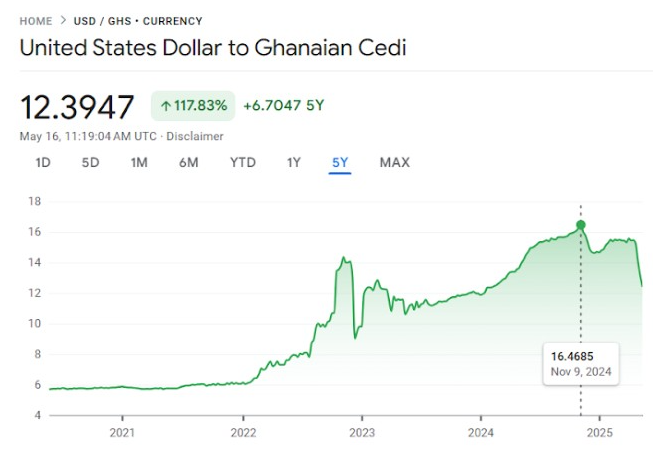
Short-term decisions become easier when a reader also understands how the dollar to cedi rate behaves over time. Historical pages help show whether a move is part of a wider pattern or just a brief swing that caught attention on one day. That wider view often reduces panic and improves judgement.
| View | What it helps track | Good for | Limitation |
| Daily interbank page | Short-term movement | Same-day monitoring | Not a retail cash quote |
| Historical interbank page | Past patterns | Trend reading | Needs interpretation |
| End-period dataset | Broader direction | Month-level context | Less useful for quick exchange |
What cedi strength means for local exchange decisions

When the cedi firms up, the difference may not feel dramatic on a tiny transaction, but it becomes clearer on larger payments. That is why households and small traders often benefit from watching direction, not just isolated headlines. Local decisions tend to improve when timing is treated with patience.
Current USD to GHS rate on official Ghana sources
Bank of Ghana publishes daily interbank FX rates, while other tools are better for illustrating mid-market or transfer logic. For most readers, the safest baseline usually begins with the central bank view, and the phrase USD to GHS rate today fits naturally at that stage of comparison before moving to customer-facing providers. Putting those sources in that order helps the reader separate reference value from real-world payout.
- Start with the official interbank page to see the reference market direction.
- Compare that with a bank or transfer app that shows customer-facing conversion.
- Check whether fees, delivery speed, or collection method change the result.
- Only then compare physical cash options if they are still necessary.
That order reduces confusion because it stops the reader from treating every visible quote as the same kind of rate.
How Bank of Ghana publishes daily interbank updates
The Bank of Ghana page lays out buying, selling, and mid figures for USDGHS, which makes it useful as a reference point. It is designed for market orientation rather than for promising what every retail user will receive. That distinction matters when someone is moving from research into action.
USD to cedi calculator intent and real payout expectations
Most readers open a converter because dollar to cedi looks like a direct answer. In reality, a calculator is best treated as a guide to market value, while the actual payout depends on fees, margins, and payout route. The reader benefits most when the page makes that difference obvious at once.
| Pros | Cons |
| A live converter gives a fast sense of market direction and helps a reader estimate whether a quote is broadly reasonable before moving money. | A converter can create false confidence when the reader assumes the displayed figure is the same as the final payout after every fee. |
| It becomes easier to compare providers when one screen shows the base figure and another shows how much the recipient may actually receive. | Some pages highlight the market number first and leave the harder part, which is the full charge structure, until later in the process. |
| For remittance planning, the tool helps with rough budgeting and reduces guesswork before a bank visit, transfer, or local cash exchange. |
Why USD to GHS tools differ from shop rates
A calculator is often built around a market reference, while a shop or app applies commercial conditions to complete the transaction. That difference is not a flaw by itself; it is simply the point where market value becomes retail service. Readers need both views, but they should never confuse them.
Dollar to cedis black market by city and timing
In everyday discussion, USD to cedis black market may sound like one moving figure for the whole country, but that is rarely how it behaves. City traffic, local demand, and the timing of the deal can all push the quote in slightly different directions. A reader comparing locations should therefore expect variation, not one fixed informal number.
Why Accra and Kumasi USD to GHS black market differs
Accra and Kumasi can feel different simply because local activity, seller confidence, and customer pressure do not always match. That means the same amount of cash may not attract the same treatment in both places. Local context still matters even when the broader market story is shared.
FAQ on USD to GHS rates and payout checks
What is the official USD to GHS rate today in Ghana?
The official reference rate is the daily interbank USDGHS rate published by Bank of Ghana. It is useful as a market benchmark, but it is not the same as the exact amount a customer will receive from a bank, app, or cash exchange.
How is an informal cash quote different from the official USD to GHS rate?
The official rate is an interbank reference published by Bank of Ghana. An informal cash quote is a separate street or retail offer that may vary by location, timing, and local demand. The two should not be treated as the same type of rate.
Is USD to cedi the same as USD to GHS?
Yes, both refer to the US dollar against the Ghana cedi. In current official usage, USD to GHS is the clearer and more standard form. USD to cedi is a common plain-language version used in search and everyday speech.
Why is the final payout different from the rate shown on a screen?
The displayed rate is often only a benchmark or starting quote. The final payout can change once the provider adds its spread, fees, delivery method, or settlement terms. That is why the real comparison should focus on the amount received in cedis, not just the headline rate.
 Kwame Ofori
 Ama Serwah
 Yaw Appiah
 Evelyn Mensah