
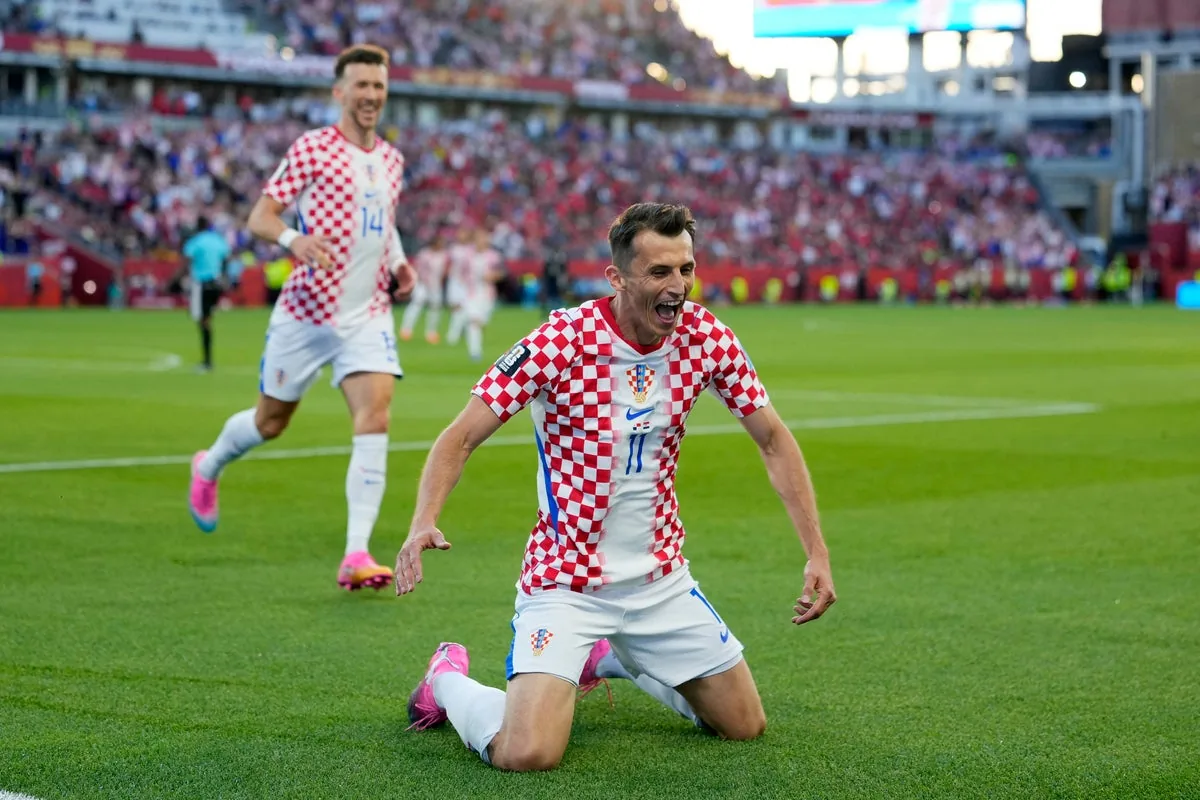
Philadelphia hosts thrilling Group L encounter
A rainy day in Philadelphia did not deter the 68,000 spectators who witnessed an engaging contest in Group L of the World Cup. Both Croatia and Ghana left the field with positive outcomes, securing their places in the knockout rounds. For Croatia, the result meant finishing second in their group, reaffirming their status as a competitive team. Ghana, on the other hand, progressed to the knockout stage for the first time since 2010, showcasing moments of strong attacking play.
There had been speculation regarding the motivation for both teams, as a goalless draw could have offered a path to progression through the Fifa qualification matrix. Such a scenario would have seen Croatia potentially finish third with a favourable route, and Ghana secure second place behind England. However, Croatia pursued a different outcome.
The initial half of the match, played in relatively cool temperatures, did not feature a high tempo. Despite this, Zlatko Dalic‘s Croatia side aimed to stretch Ghana‘s defence by utilising their full-backs wide. An early opportunity for Croatia arose in the ninth minute from an Ivan Perisic cross, which was collected by goalkeeper Benjamin Asare.
When direct crosses proved difficult, Croatia employed an alternative strategy. In the 17th minute, after Gideon Mensah lost possession on Ghana‘s left flank, the ball was moved centrally to Nikola Vlasic, positioned 25 yards from goal. Vlasic‘s shot struck Asare‘s right-hand post.
Croatia continued to press, and by the half-hour mark, they had established control, with Luka Modric and Mateo Kovacic orchestrating play. A sequence in the 31st minute saw the ball worked from the left to Kovacic, who quickly passed it across the field to Petar Sucic. Sucic then took a low shot from 30 yards, which went through Marvin Senaya‘s legs and found the net, hitting the same post Vlasic had earlier.
Ghana responded with an immediate chance when Antoine Semenyo entered the Croatia box and fired a shot that narrowly missed the target. At half-time, Ghana‘s coach, Carlos Queiroz, made tactical adjustments, including a double substitution that brought on Abdul Fatawu to the right wing.
Following the restart, Ghana intensified their efforts. In the 49th minute, Fatawu delivered a cross that just eluded Semenyo. Three minutes later, Fatawu intercepted a Croatian pass on the edge of the box and set up Semenyo again, but the forward’s heavy touch allowed Dominik Livakovic to gather the ball.
Ghana’s equalizer and Croatia’s late winner
The atmosphere in the stadium shifted when news of England‘s advantage against Panama was announced. Further drama unfolded in the 73rd minute when Ghana secured an equalizer. The goal came from a free-kick delivered by second-half substitute Ernest Nuamah, which was met by defender Derrick Luckassen. Luckassen used the ball’s velocity to redirect it low across goal and into the net. The initial offside call by Canadian referee Drew Fischer was overturned after a VAR review.
The momentum continued to swing, and with less than ten minutes remaining, Croatia found another gear. Substitute Mario Pasalic unleashed a powerful shot that forced a save from Asare. The subsequent corner, delivered by Modric, found Vlasic in a crowded box, who then scored with a precise finish.
The goal sparked celebratory scenes among Croatia‘s supporters. Despite the late stage of the game, Modric‘s presence ensured that Croatia remained focused. In stoppage time, when Fatawu once again advanced into the Croatia box, it was Modric who dispossessed the winger. Both teams demonstrated their deserving place in the knockout stages of the tournament.
Group L permutations and qualification criteria
The match between Croatia and Ghana was pivotal in determining who would join England in the World Cup knockout stage. England had already secured their progression, though they had missed an earlier opportunity to top the group after a draw with Ghana.
For Croatia, avoiding defeat was crucial to prevent an early exit from the tournament, especially given their strong performances in previous editions, including a semi-final finish in 2022 and a final appearance in 2018. A victory would elevate them to second place, while a draw would be sufficient to qualify as one of the eight best third-placed teams.
Ghana had already secured a spot in the round of 32, having accumulated four points from their initial two matches, guaranteeing them at least a third-place finish. Any result other than a loss would ensure they finished in the top two. There was even a possibility for Ghana to top the group if they achieved a significant win against Croatia and England did not secure a similar result against Panama, a scenario that could lead to a match against Portugal for the group’s runner-up.
In cases where teams finish with the same number of points, their group standing is determined by their head-to-head record. If multiple teams are level on points, a mini-league is formed using results from matches between those teams, with goal difference and goals scored serving as further tie-breakers. If teams remain level, the Team Conduct Score (TCS), which is a fair play score based on cards received, is used. The team with a score closer to zero progresses. If all these criteria fail to separate teams, the higher Fifa ranking from June’s published update would be the final determinant.
The top eight third-placed teams are determined by points accumulated, followed by goal difference if points are equal. Teams finishing third with four or more points are likely to advance, while those with three points would require a superior goal difference to progress.
Source: theguardian.com
 Ama Serwah
 Yaw Appiah
 Kwame Ofori
 Evelyn Mensah