
Public banking information matters most when it is easy to verify. In Ghana, the bank of Ghana sits at the centre of that process and shapes how official financial information is read by the public. A careful reader usually learns more from formal notices, registered-institution records and policy language than from loud summaries. That is why this guide treats official structure, leadership and oversight as the practical starting point. It focuses on how readers can identify reliable sources, understand what the institution actually does and separate official guidance from recycled commentary. In that wider framework, the bank sets the tone for supervision, policy and payment stability.
How BOG relates to banks and public trust
Trust grows faster when bank rules are visible in public guidance and licensing records. That visibility helps readers understand how supervision is presented in practice rather than only in broad claims. It also makes complaint routes, disclosure standards and formal oversight easier to evaluate without guesswork. When those signals are easy to trace, public confidence becomes less dependent on adverts and more dependent on proof. As a result, banks in Ghana are judged more calmly and on the basis of evidence instead of presentation alone.
What BOG supervises across licensed institutions and payment systems
The official role is wider than many readers first assume. It reaches across banking business, parts of the wider financial sector and the sound operation of payment systems. It is why the central bank of Ghana cannot be understood only through ordinary deposits and loans. That broader reach matters because financial stability depends on systems working together, not on single institutions acting well in isolation. A strong guide therefore needs to show supervision as a framework, not as a slogan.
What readers should verify before trusting banks in Ghana
A quick check is often more useful than a long promise. When readers compare banks in Ghana, the strongest signals usually come from licensing status, disclosure habits, complaint routes and the clarity of official public notices. That simple habit reduces the chance of judging a serious institution by design alone. It also helps separate real compliance from borrowed language.
- Licensed list: Verify that the institution appears in an official licensed list.
- Public notices: Check whether public notices use consistent names and departments.
- Complaint details: Read complaint details before trusting marketing language.
- Product claims: Compare product claims with formal regulatory wording.
That approach keeps the review practical. It also gives the reader a repeatable method instead of a one-off impression.
Who the governor of Bank of Ghana is today
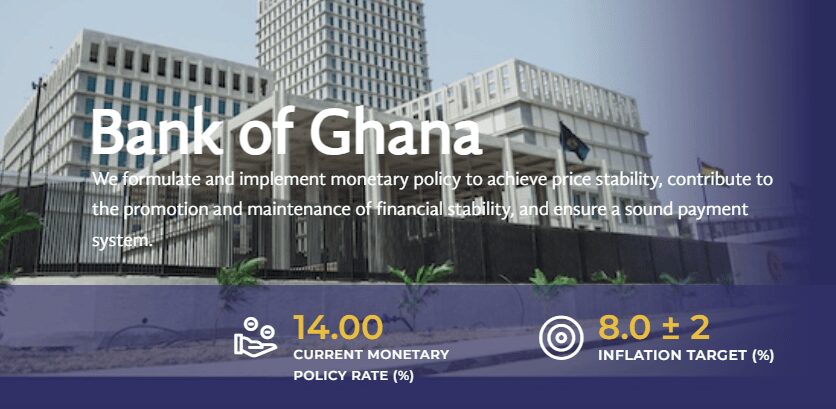
Leadership matters because policy language sounds abstract until a real office stands behind it. At present, the governor of bank of Ghana is Dr Johnson Pandit Asiama, and the role carries policy weight and public responsibility. Readers do not need insider knowledge to understand that point; they only need to see how official leadership is presented and how responsibilities are described. That makes leadership part of trust, not just a name on a page.
How the bank of Ghana governor shapes policy direction
Policy direction is not only about speeches. The bank of Ghana governor helps shape how monetary policy is explained, how stability priorities are framed and how the institution signals confidence to the public and markets. Even for an ordinary reader, that influence becomes visible in official briefings, governance material and the tone of institutional communication. The office therefore matters both symbolically and practically.
Which public duties define the governor role clearly
The role is easier to understand when stripped of ceremony. Public duties include chairing institutional leadership, speaking for policy direction and representing the institution in matters tied to financial stability and oversight. What matters for readers is not prestige but accountability, because the public reads leadership through actions, clarity and consistency. That is why official governance pages are worth checking alongside news items.
Using the Bank of Ghana website safely
The safest reading habit is to treat the website as the first stop for formal notices. Official pages tend to group policy, supervision, downloads and institutional information in a way that makes cross-checking possible. That design helps careful readers move from headline to source without relying on reposted text. It also reduces confusion when similar claims appear elsewhere. In that sense, the BOG website works better as a place to confirm structure rather than chase rumours.
How to confirm a bank website page
A safe check works best when it follows the same order every time. That routine keeps the reader from trusting a shared screenshot, a copied paragraph or a page with a familiar tone but weak proof. A simple sequence usually does enough work.
- Domain: Check the spelling and page structure first to avoid confusing an official source with a copied or misleading page.
- Section title: Read the department or section title to understand which part of the institution published the information.
- Comparison: Compare the notice with related downloads or supervision pages on the bank of Ghana website to confirm consistency.
- Official records: Confirm whether the named institution appears in official records before relying on the page content.
The sequence cuts through noise. It also gives the reader a method that still works when public discussion becomes messy.
Why BOG.gov.gh matters to the central bank of Ghana
An official domain matters because authority should be traceable. For the central bank of Ghana, the domain is more than a web address; it is the public doorway to governance, regulation, monetary policy and institutional notices. Readers who start there are less likely to confuse commentary with source material. That is a small shift, but it changes the quality of the whole reading process.
Key BOG.gov.gh pages worth bookmarking for updates today
A few sections do most of the heavy lifting for readers who want clarity. The most useful ones are usually the homepage, supervision pages, registered-institution listings and download areas on the bank website. Together, they create a practical route from general information to formal detail. That mix saves time. It also helps readers move from broad questions to specific verification without drifting into guesswork.
| Section | What it helps with | Why it matters |
| Homepage | Current notices and headline data | Gives the first official signal |
| Supervision | Regulatory and licensing context | Supports credibility checks |
| Registered institutions | Name-by-name verification | Helps confirm legal status |
| Downloads | Directives, acts and guidance | Adds formal detail |
How policy statements differ from media summaries online
Media summaries are useful, but they compress. Official policy language on bog.gov.gh tends to carry fuller context, firmer wording and a clearer sense of institutional intent, while summaries often strip the detail down to reaction and effect. That does not make summaries useless; it simply means they work better after the source has been read. A careful article should reflect that order.
How the Bank works as a central bank
The easiest way to read the institution is to start with function. The bank works as a bank by pursuing price stability, supporting financial stability and helping to keep the banking and payment system operating effectively. Those duties sound formal, but they shape everyday conditions in lending, savings, transfers and public confidence. Once that is clear, the rest of the structure becomes easier to follow.
Core bank functions behind stability and policy
The core functions are not mysterious. They include monetary policy, regulatory oversight, support for financial-system soundness and the wider management logic needed for a functioning payments environment expected from a bank. When these parts are read together, the institution looks less like a distant office and more like a framework holding several public-facing responsibilities in balance. That is the angle a useful guide should preserve.
How BOG shapes standards for banks in Ghana
Standards matter most when they are visible. Through supervision, disclosure expectations and regulatory framing, institutions are pushed toward clearer conduct, and that directly affects how the public reads banks in Ghana. The result is not perfection, but it does create a stronger basis for comparison than image alone. For careful readers, that difference is valuable. The balance is clear enough. Official material does not remove the need for judgement, but it gives that judgement firmer ground.
| Pros | Cons |
| Official guidance gives readers a direct benchmark. | Some wording can feel technical at first glance. |
| Public records reduce dependence on rumours. | Important items may sit in different sections. |
| Regulatory language helps compare institutions fairly. | Readers still need patience to cross-check details. |
Practical checks for credibility, complaints and public disclosures
A good credibility check does not need specialist language. It usually starts with licensing, then moves to complaint paths, public notices, governance clarity and whether disclosures can be found without effort when comparing banks in Ghana. Small checks often reveal more than long promises. That method keeps the reader grounded. It also makes comparison more about evidence than tone.
Frequently asked questions about the Bank of Ghana and official banking sources
What does the bank do in the country’s financial system?
The bank acts as the central bank and helps maintain monetary and financial stability. It oversees key banking functions, supports payment systems, and plays a major role in currency management. It also provides official guidance that helps the public understand major financial policies and regulatory decisions.
Where can readers find official banking information in Ghana?
The safest approach is to use official banking sources such as the bank, licensed commercial banks, and formal regulatory notices. These sources usually publish verified updates on banking rules, consumer guidance, and financial system changes. Using official channels helps readers avoid confusion caused by rumours, misleading posts, or outdated summaries.
Why is it important to rely on official banking sources instead of third-party claims?
Official banking sources are more reliable because they reflect formal statements, confirmed notices, and regulated information. Third-party pages may simplify important details or repeat claims without proper context. For topics such as account safety, banking rules, or policy changes, official communication gives a stronger factual base.
How can someone check whether a banking update is genuine?
A genuine update should match the wording and context used by the bank or another recognised banking institution. Readers should compare the message with formal announcements, official documents, or verified contact channels before treating it as accurate. This extra step is especially useful when the information affects money transfers, account access, or customer protection.
 Kwame Ofori
 Ama Serwah
 Yaw Appiah
 Evelyn Mensah