
Introduction
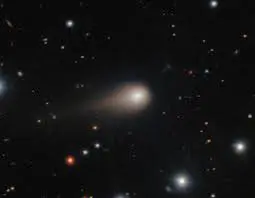
The arrival of interstellar comet 3I ATLAS has captured the imagination of scientists and astronomy enthusiasts alike. This celestial body, discovered in 2019, is the first known comet to enter our solar system from interstellar space. Understanding the features and trajectory of 3I ATLAS is critical, as it can shed light on the conditions present during the formation of our solar system and possibly the wider galaxy.
Key Details About Comet 3I ATLAS
Discovered by the Asteroid Terrestrial-impact Last Alert System (ATLAS) in December 2019, comet 3I ATLAS has a hyperbolic orbit, indicating that it comes from beyond our solar system. It was first observed on its approach in early 2020, shortly before its nearest approach to Earth. The comet passed closest to our planet on May 31, 2020, at a distance of about 6.9 million kilometres, roughly 18 times the distance to the Moon. This close encounter allowed astronomers to study it without significant obstruction, yielding invaluable data.
Composition and Characteristics
Comet 3I ATLAS is believed to be composed primarily of ice and dust, similar to other comets but with possible unique interstellar characteristics. Preliminary observations suggested that its nucleus is approximately 1.0 to 1.5 kilometres in diameter. When its coma and tail developed, it was relatively faint, making it difficult to observe without telescopes. Nevertheless, scientists believe that studying its makeup could provide insights into the molecular compositions that existed in the early solar system, potentially illuminating how life could have begun on Earth and elsewhere.
Implications for Future Research
The arrival of 3I ATLAS marks an essential milestone in the field of astronomy. It has spurred interest in the study of other interstellar objects and highlights the need for improved monitoring systems to detect similar extraterrestrial visitors in real-time. Its unique trajectory emphasizes the dynamic nature of our galaxy and leads to important discussions about the origins of such objects. As telescopes become more advanced, future observations of 3I ATLAS and similar bodies may lead to groundbreaking discoveries in astrophysics.
Conclusion
Interstellar comet 3I ATLAS provides a thrilling opportunity to advance our understanding of the universe. As researchers continue to assess its characteristics and implications, we can look forward to new revelations about our solar system’s formation and the conditions necessary for life. The scientific community remains optimistic that continued studies of such interstellar comets will lead to a deeper understanding of both our world and the cosmos beyond.
 Yaw Appiah
 Ama Serwah
 Evelyn Mensah
 Kwame Ofori