
Introduction
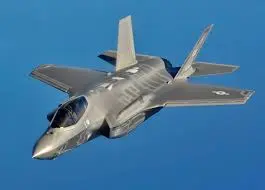
The F-35 Lightning II, developed by Lockheed Martin, represents one of the most significant advancements in military aviation technology.
This multirole stealth fighter has captured the attention of military strategists worldwide, highlighting its importance not just for the United States but also for allied countries. As military engagements become increasingly complex, the need for advanced aerial capabilities like those of the F-35 becomes vitally relevant.
Technical Advancements
The F-35 program aims to provide an affordable and versatile platform. With its advanced stealth capabilities, a state-of-the-art sensor suite, and integrated avionics that enable superior situational awareness, the F-35 is a game changer on the battlefield. The jet uses advanced composite materials to reduce its radar cross-section, making it less detectable to enemy radar systems.
Recently, the F-35 has undergone significant upgrades, including enhancements in software and hardware, improving its combat capabilities and operational safety. According to the Pentagon, the U.S. Air Force has reported increased operational availability rates, which translates into more successful missions in a wide variety of combat scenarios.
International Impact
Countries such as the UK, Israel, and Japan have invested significantly in the F-35 program. The British Royal Air Force is set to operate the F-35B variant, which is capable of vertical take-off and landing, further extending its operational flexibility. Additionally, NATO’s commitment to integrating F-35s into their air forces demonstrates its global relevance.
However, the program has not been without controversy. Cost overruns and delays have raised concerns regarding its affordability and overall effectiveness. Nevertheless, military leaders emphasize that the F-35 remains indispensable amid rising global tensions, especially concerning geopolitical threats from nations like China and Russia.
Conclusion
The F-35 fighter jet’s continued development signifies profound implications for modern warfare strategies. As nations adapt to new threats, the importance of advanced military technology underscores the F-35’s role in ensuring air superiority. Looking forward, analysts predict that the F-35’s adaptability will remain crucial as conflicts evolve and the global military landscape changes. The investment in such capabilities signifies not only a commitment to defense but also a strategic posture in an increasingly unpredictable world.
 Ama Serwah
 Kwame Ofori