
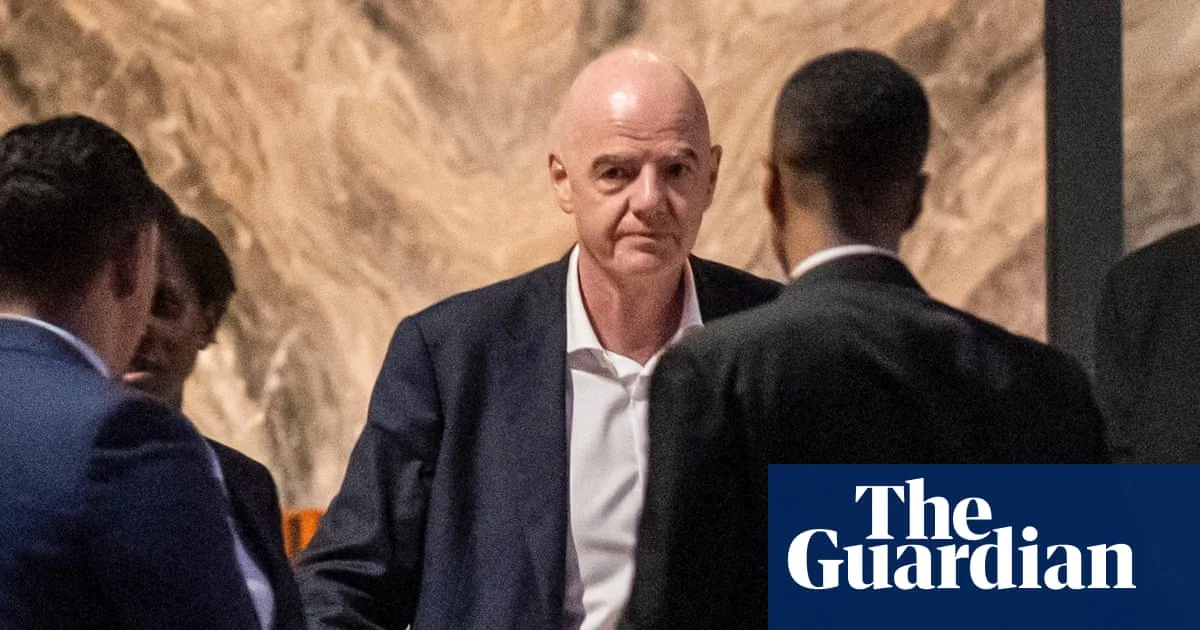
Uefa is reportedly planning an independent valuation of Fifa’s World Cup sale proposals. This comes amid concerns that Gianni Infantino, Fifa’s president, may have agreed to sell future profits from the tournament to a private equity firm at a valuation below market rate. The European football governing body remains steadfast in its position despite a written apology issued by Infantino to Fifa’s 211 member associations.
The apology followed crisis talks in Morocco, but Uefa intends to continue pushing for Infantino’s removal. Part of their strategy involves further scrutiny of the proposal, which Infantino later acknowledged as “a mistake.”
Details of the Proposed Sale
The abandoned Fifa Forward Enterprise plan, which was withdrawn after four days last week, involved the sale of a 21% stake to Thrive Capital. Thrive Capital, a US private equity firm, is led by Joshua Kushner, brother of Donald Trump’s son-in-law, Jared Kushner.
Uefa played a significant role in Fifa’s decision to reverse course. This was prompted by a threat from all 55 member associations to boycott the World Cup and other tournaments. Now, Uefa is focused on understanding how Fifa’s commercial assets were valued.
Several market analysts have been consulted by Uefa regarding an independent valuation. A formal study is expected to be commissioned once the immediate uncertainty surrounding Infantino’s leadership subsides. Reports from last week indicated that the Fifa sales presentation lacked details on the valuation process or evidence of a competitive tender.
A source familiar with Uefa’s plans questioned the valuation, asking if it was a robust process and if the World Cup was being sold at a reduced price. Market analysts have suggested that a valuation appears low, especially since the proposal did not seem to account for potential expansion and the creation of new tournaments.
The source noted that the World Cup is a uniquely global entertainment event, making an increase on current revenues seem modest. This suggests the offer might have been undervalued, as the financial benefits of future expansion, such as more teams, more frequent World Cups, and additional Club World Cups, were not included in the pricing.
Reactions and Apologies
The proposed plan drew widespread criticism across the football community. Uefa explicitly stated that the World Cup is not a commodity to be sold and cannot be treated as an investment product. They warned that their 55 national associations would withdraw from Fifa competitions if the plan proceeded, which could have impacted teams like England, Scotland, Wales, and Northern Ireland.
Other football bodies also voiced their concerns. Concacaf, which governs football in North and Central America, expressed deep concern, while the Asian Football Confederation stated that football should never have been put in such a position. Following this widespread backlash, Fifa abandoned the plans on August 1.
After a meeting in Rabat, Morocco, Fifa acknowledged “mistakes” and admitted the process “should have been handled differently.” Infantino and Fifa secretary general Mattias Grafstrom issued a letter expressing their “sincere apologies” and committing to prevent similar incidents in the future. Despite internal criticisms from figures such as Grafström, chief operating officer Kevin Lamour, and head of football development Arsène Wenger, Fifa’s management board reaffirmed its full support for Infantino as president.
Uefa has also called for a comprehensive review of Fifa’s governance and has threatened legal action. Infantino appeared alongside Grafström at a Women’s Africa Cup of Nations group game between Malawi and Zambia in Morocco after the crisis talks in Rabat.
Source: theguardian.com
 Ama Serwah
 Yaw Appiah
 Kwame Ofori
 Evelyn Mensah