
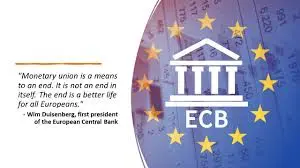
Importance of the European Central Bank
The European Central Bank (ECB) plays a crucial role in stabilising the Eurozone economy. Established in 1998, it oversees monetary policy for the Euro area, affecting interest rates, inflation, and economic growth. With the ongoing challenges faced in the global economy, the ECB’s actions are of utmost importance to maintain financial stability and foster economic recovery post-pandemic.
Recent Monetary Policy Decisions
In October 2023, the ECB convened to assess the current economic landscape, marked by rising inflation rates and economic uncertainty in Europe. The governing council decided to maintain interest rates at 4.00%, signalling an ongoing commitment to tackle inflation which peaked over the past year. Analysts interpret this cautious approach as a balancing act between curbing rising prices and not stifling economic growth further.
Launched amid global economic concerns, the ECB has been closely monitoring supply chain disruptions and geopolitical tensions that impact the Eurozone economy. The recent energy crisis, exacerbated by geopolitical conflicts, also poses a significant challenge to inflation and economic growth. Christine Lagarde, President of the ECB, emphasised the need for vigilance in her recent speeches, acknowledging the delicate interplay between monetary measures and economic realities.
Economic Impact and Predictions
The ECB’s recent decisions are considered vital not only for inflation control but also for stimulating growth in the Eurozone. Economic forecasts suggest that while inflation may remain elevated in the short term, projected growth might stabilise as supply chains recover and consumer confidence gradually returns. The Eurozone economy is projected to grow by 1.5% in 2024, barring any significant shocks.
Moreover, the ECB’s commitment to supporting the economy signals to investors and markets the importance of sustaining economic momentum. As interest rates remain unchanged for the foreseeable future, businesses and consumers might be more likely to invest and spend, potentially invigorating economic activity.
Conclusion
The actions of the European Central Bank are integral to the current and future economic environment within the Eurozone. Their cautious yet proactive stance in addressing inflation while supporting growth demonstrates the complexities of modern monetary policy. As we move forward, the ECB will play a pivotal role in steering the economic recovery, making it essential for businesses and consumers alike to stay informed on these developments.
 Yaw Appiah
 Ama Serwah
 Evelyn Mensah
 Kwame Ofori