
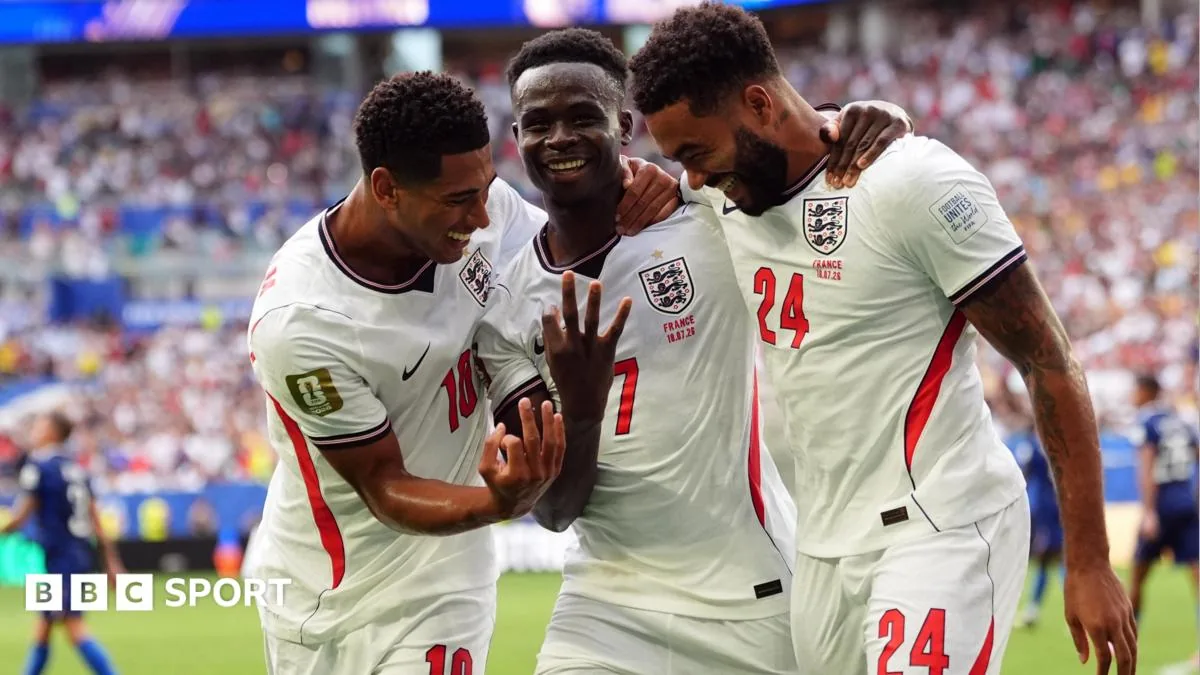
England’s men’s national team achieved their best World Cup finish since their 1966 triumph, securing third place after a 6-4 win against France in the bronze final. This result marks the team’s second-best World Cup performance ever, and their highest finish on foreign soil. The match, described as a chaotic encounter, saw England score six goals, a first for them in a World Cup third-place match.
The bronze final unfolded with a flurry of goals, making it the highest-scoring third-place match in World Cup history. England took an early lead, with Declan Rice and Ezri Konsa scoring within the first 20 minutes. Bukayo Saka then added two goals before halftime, giving England a four-goal advantage. This was the first time France had trailed by four goals at halftime in any match since April 1930.
The second half saw a shift in momentum as France mounted a comeback. Kylian Mbappe scored twice, and Bradley Barcola added another, narrowing the deficit. Mbappe’s goals also made him the World Cup’s all-time leading scorer with 22 goals, surpassing Lionel Messi. He also became the first player to score double figures in a men’s World Cup since 1970.
Despite France’s efforts, Saka completed his hat-trick from the penalty spot in the 87th minute after Djed Spence was fouled. Ousmane Dembele scored for France in stoppage time, but Jude Bellingham sealed England’s 6-4 victory with a goal in the 98th minute. This was the first time France had conceded six goals in a World Cup match, and the first time in 66 years they had conceded six goals in any match.
Bellingham concluded his individual tournament with seven goals, the most by an England men’s player in a single World Cup edition. Saka’s hat-trick made him only the second England player to achieve this feat in a World Cup knockout match, following Sir Geoff Hurst in the 1966 final. The match featured 38 shots, with 20 on target, and had more goals than any previous England World Cup match.
Team Performance and Managerial Questions
The bronze final performance, particularly the attacking intent shown by England, led to questions regarding head coach Thomas Tuchel’s tactical decisions in the preceding semi-final loss to Argentina. Tuchel made seven changes for the France match, including starting Saka, who had been struggling with fitness throughout the tournament, and leaving out Harry Kane and Bellingham.
Some players reportedly expressed misgivings about Tuchel’s defensive approach and substitutions during the loss to Argentina. Despite the Football Association reaffirming its backing for Tuchel to remain in charge for Euro 2028, there are concerns about potential player discontent and fan reactions. Tuchel was booed by supporters in Miami before the France game, indicating ongoing fan anger.
The team’s third-place finish is being viewed by some as a disappointment, given the expectation for Tuchel to overcome previous barriers in World Cups. The passive strategy employed against Argentina in the semi-final contributed to their defeat, leading to a sense of missed opportunity.
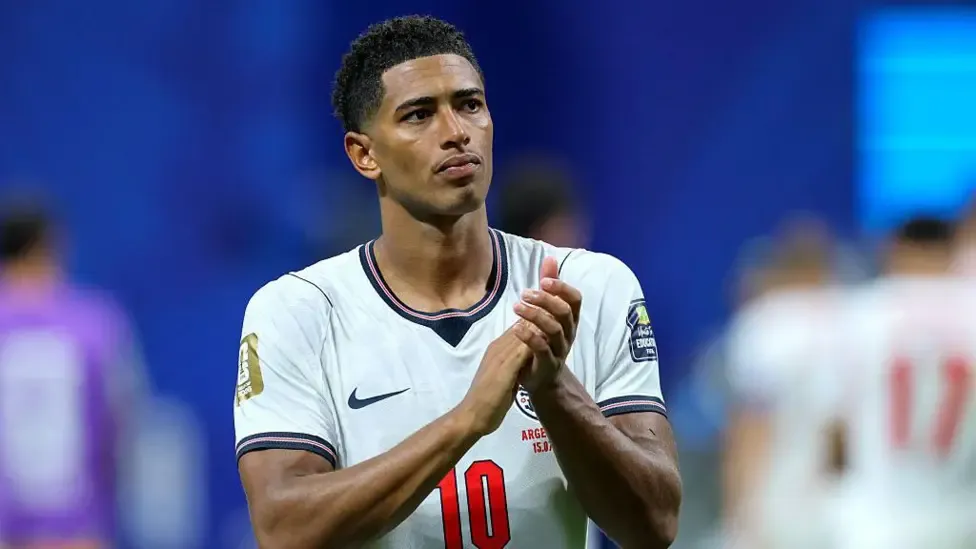
Despite the overall disappointment, several players received credit for their performances. Harry Kane and Jude Bellingham were instrumental in guiding England through matches against DR Congo, Mexico, and Norway. Bellingham finished the tournament with seven goals, while Kane was one goal behind him. Djed Spence also earned an honourable mention for his performance against Norway and Argentina, which included a crucial goal-saving challenge.
Both Anthony Gordon and Bukayo Saka ended the World Cup with three assists each. Saka’s strong performance in the bronze final, where he scored a hat-trick, raised questions about why he did not feature in the semi-final against Argentina.
Looking Ahead to Future Tournaments
The focus for England now shifts to Euro 2028. The team needs to develop a clear strategy to become more potent and resilient, moving beyond a one-dimensional approach. Tuchel will have the opportunity to integrate emerging talents such as Liverpool’s 17-year-old forward Rio Ngumoah and Arsenal’s 16-year-old Max Dowman into the squad.
The World Cup in Morocco, Portugal, and Spain in 2030 will mark 64 years since England’s last victory in the tournament. The pressure remains on Tuchel to find solutions to guide England to success in future competitions.
Meanwhile, the bronze final also marked the end of Didier Deschamps’ tenure as France manager, his 187th and final match in charge. He led France to World Cup glory in 2018. His final game saw France concede six goals, a first competitive defeat against England since 1982.
Source: bbc.com
 Ama Serwah
 Yaw Appiah
 Kwame Ofori